
On 9 October I picked up Jury from her hotel in Sants for a photo walk around Barcelona together. Jury had come from Manila and had only brought her phone to photograph the city.
Travelling light doesn’t mean giving up great photos
It happens to a lot of people who travel: no camera, no tripod, no accessories. Anything that doesn’t fit in the suitcase stays at home, and the phone becomes the only tool for photographing the trip.
And shooting at night on a phone has its challenges, especially since we wanted to end up on Montjuïc: there is little light, the water in the fountains never stops moving and, for a sharp, well-composed photo, the phone has to stay completely still. Handheld, the slightest shake shows.
So I lent her what she needed for her photos to come out well: a tripod and a smartphone head. With the phone held steady, Jury could forget about keeping her hands still and focus on what matters, the framing and the moment.
The other part of the plan was timing. The Magic Fountain show doesn’t run all night and has fixed times, so the route was designed to reach Montjuïc with time to spare, find our spot and have the tripod set up before it began.
From the Waterfront to the Magic Fountain
1The Waterfront, with Hotel W behind
We started our photo walk around the Waterfront, with Hotel W, the “Vela”, in the background. It is the Ricardo Bofill building that closes off Barceloneta by the sea, and its sail shape makes it one of the most recognisable outlines in the city.
It was a good place to start: with the sea, the sand and the promenade, Jury could take her first photos with the tripod, see how the image changes once the phone is fixed, and practise her framing before night fully fell.
2Plaça d’Espanya and Montjuïc
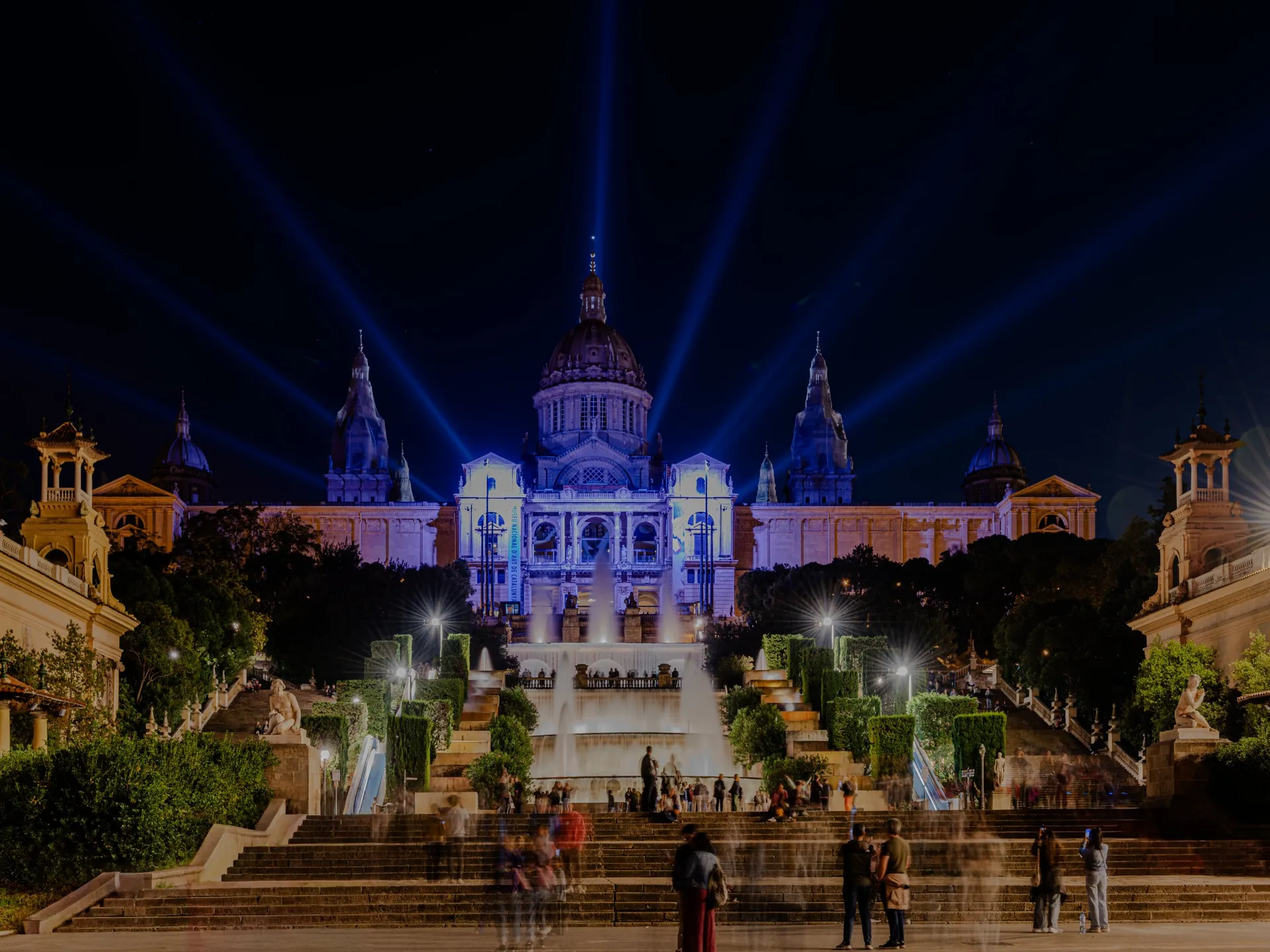
Then we crossed the city to Plaça d’Espanya, the great gateway to Montjuïc. From there, Avinguda de la Reina Maria Cristina climbs between the Venetian Towers towards the fountains and the Palau Nacional, home of the MNAC. The whole ensemble was built for the 1929 International Exhibition, just like Carles Buïgas’s Magic Fountain.
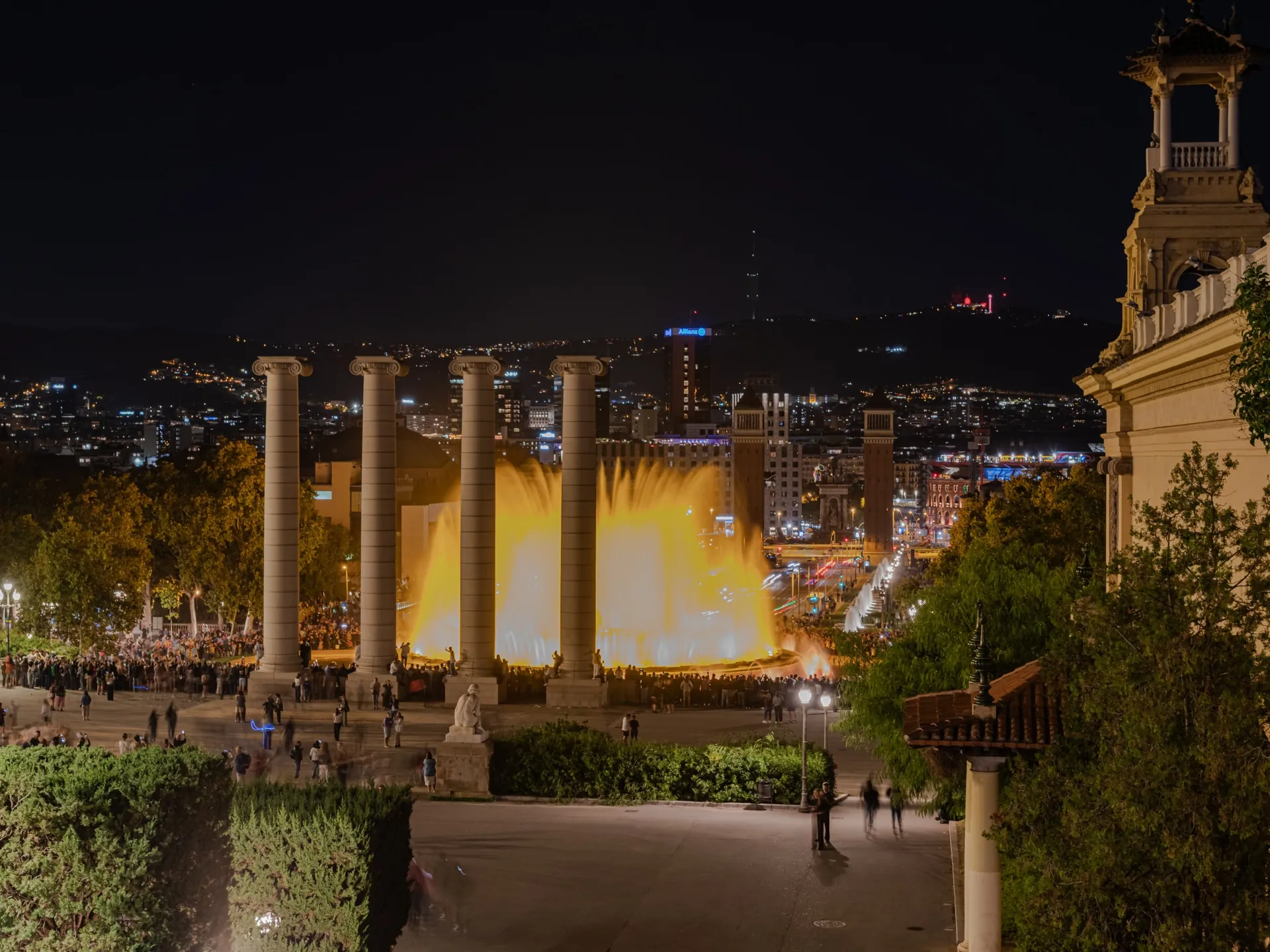
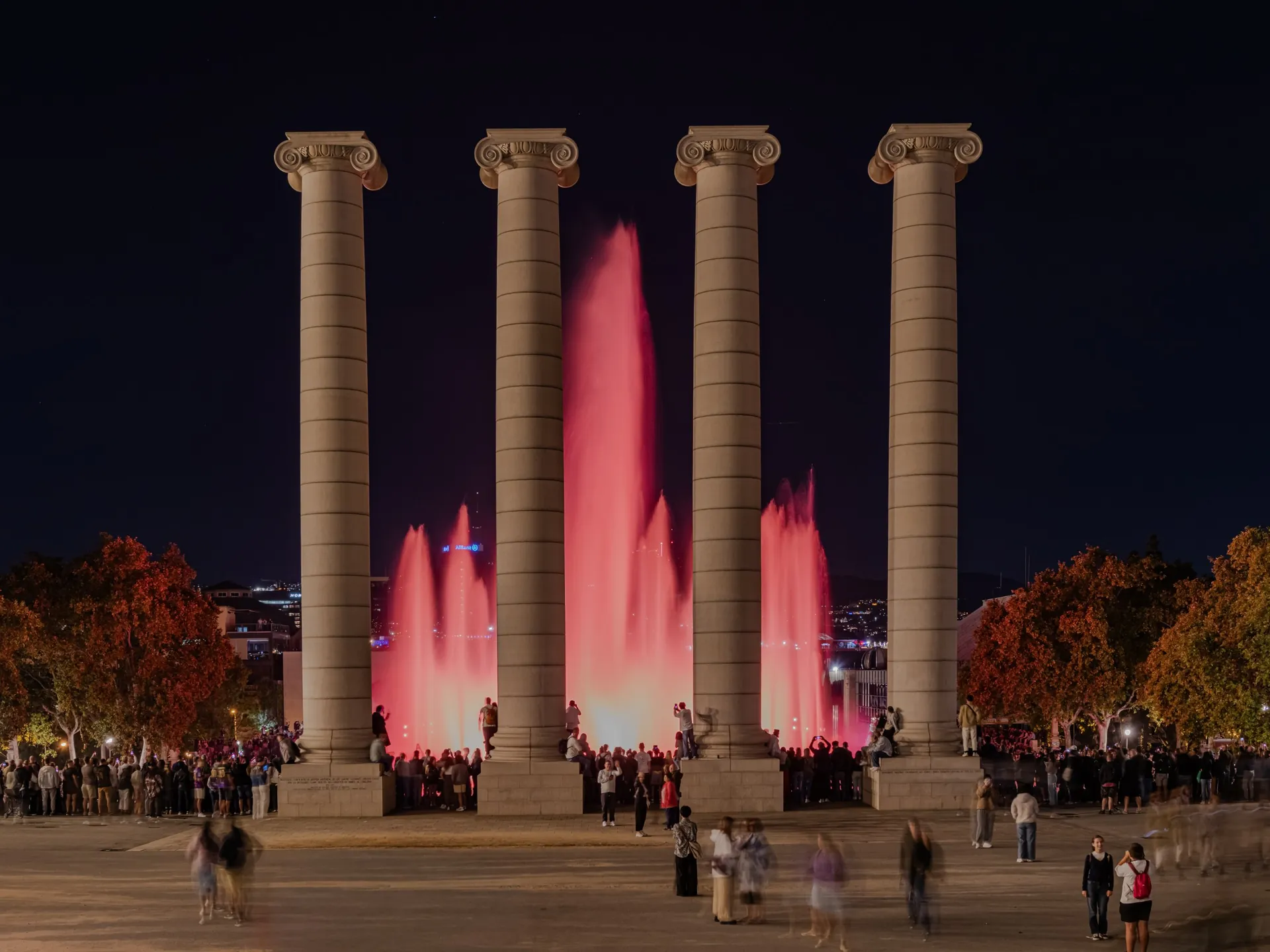
Halfway up stand Puig i Cadafalch’s Four Columns: built in 1919, torn down in 1928 and rebuilt in 2010. With the avenue and the square behind them, they make one of the most photogenic frames in the area.
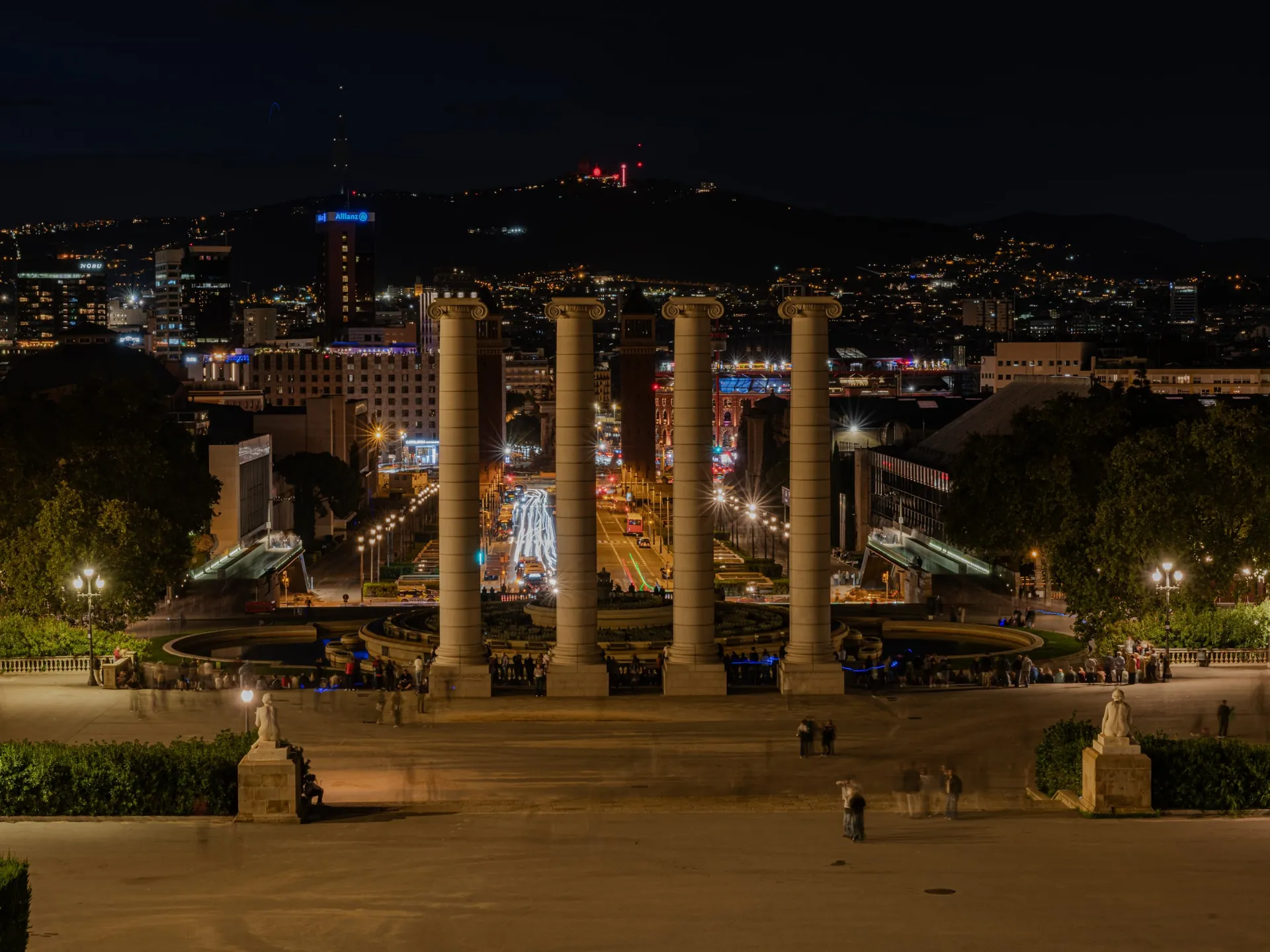
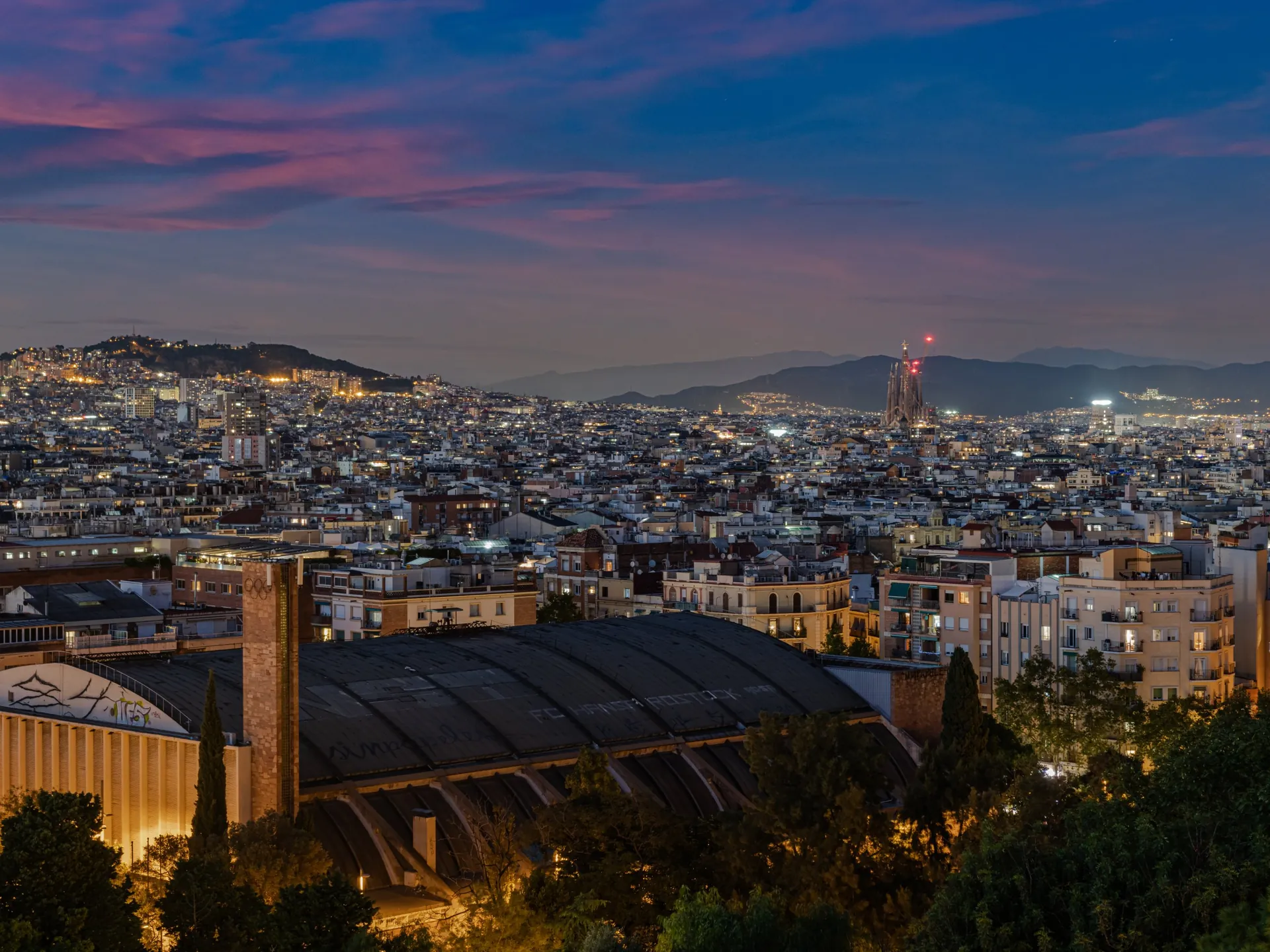
Preparation is key here. The show is free, but it only runs on certain days and at fixed times: in autumn, Thursday to Saturday from 21:00, and in summer on more days and a little later. Because the times change with the season, I always check them on the City Council website before the tour. And it’s worth arriving early, because it gets crowded and the best spots go fast.
3The Magic Fountain show
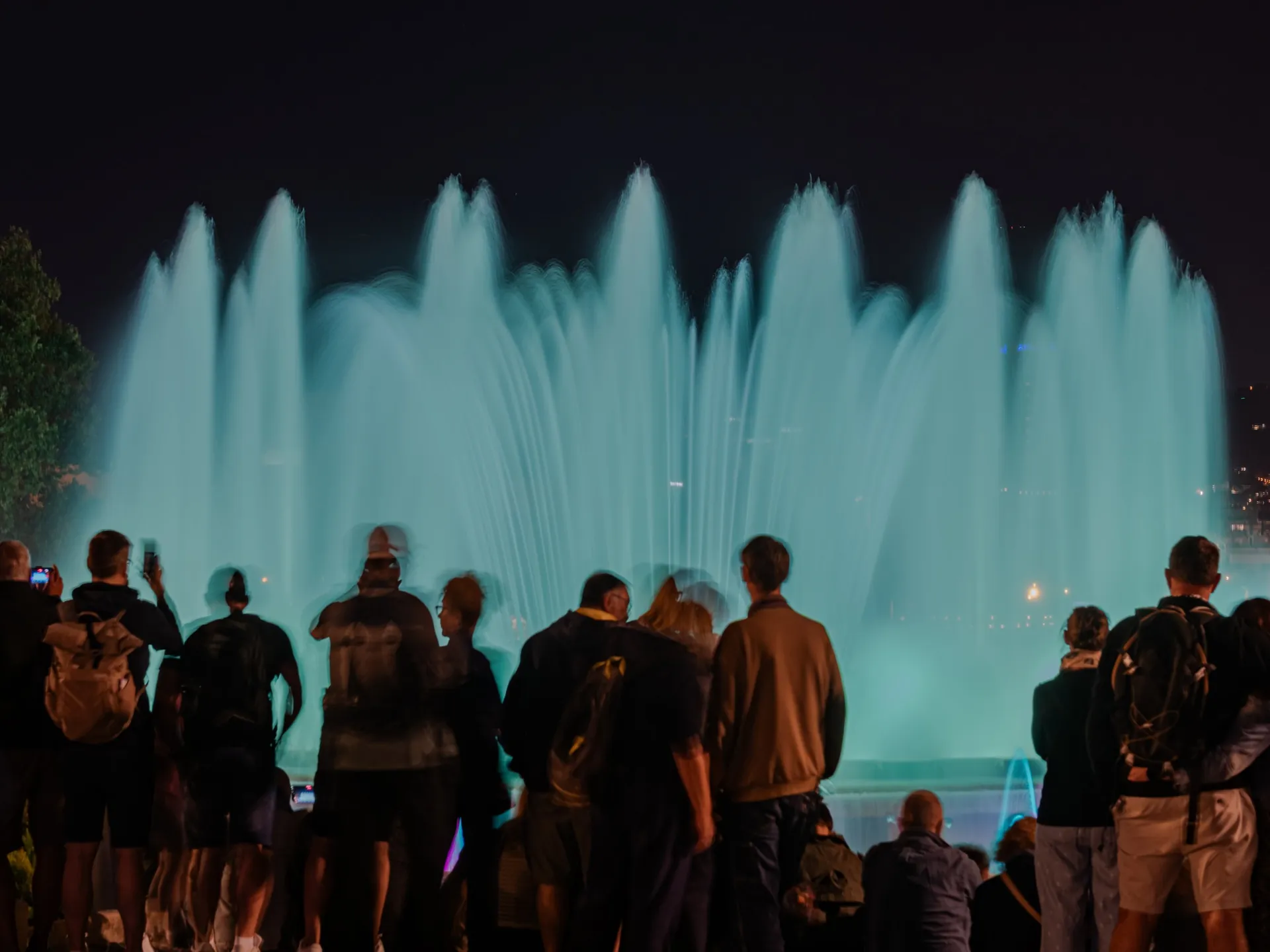
And finally, the lights. The Magic Fountain keeps changing colour and shape to the rhythm of the music, so every shot comes out different.
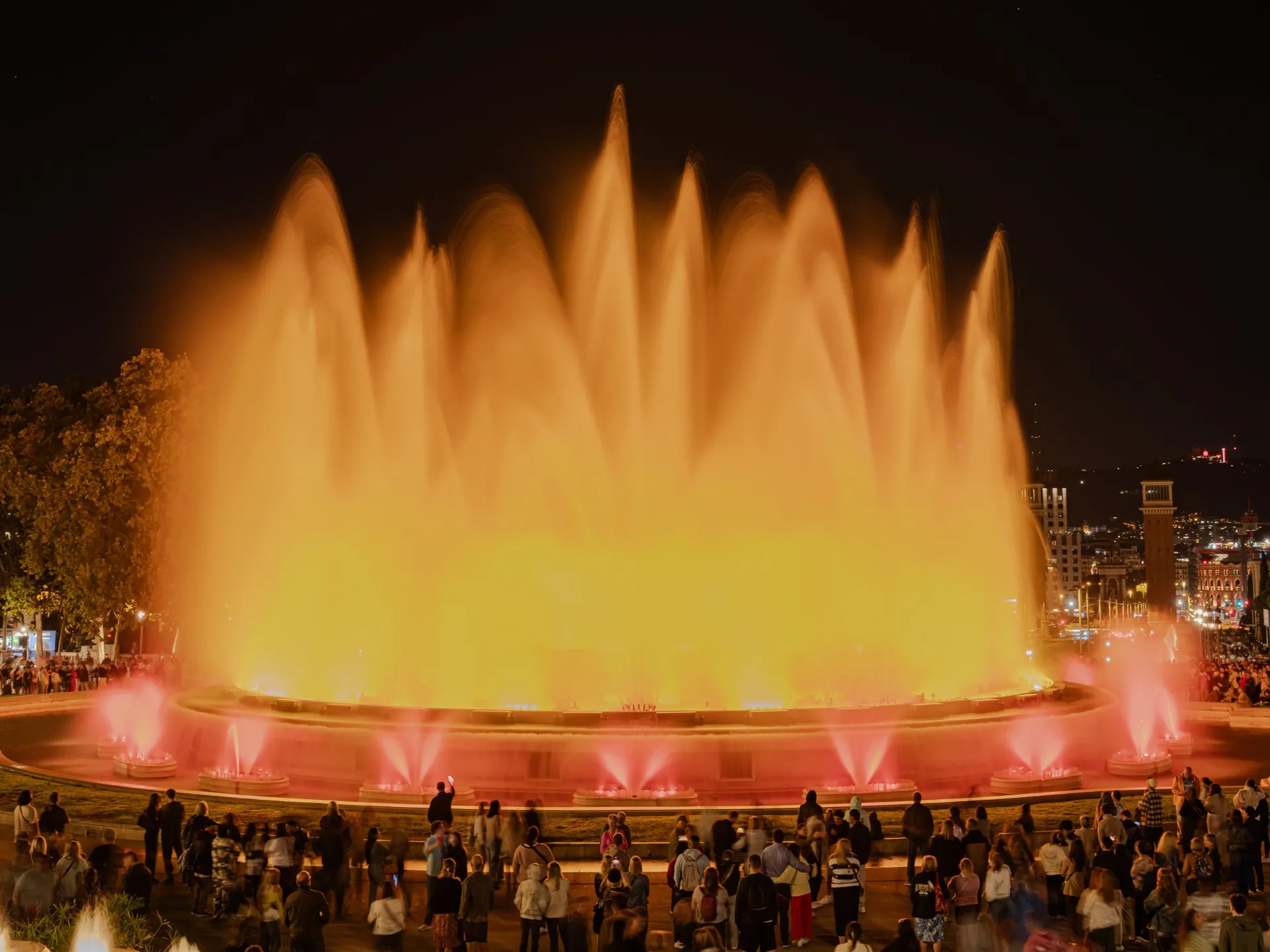
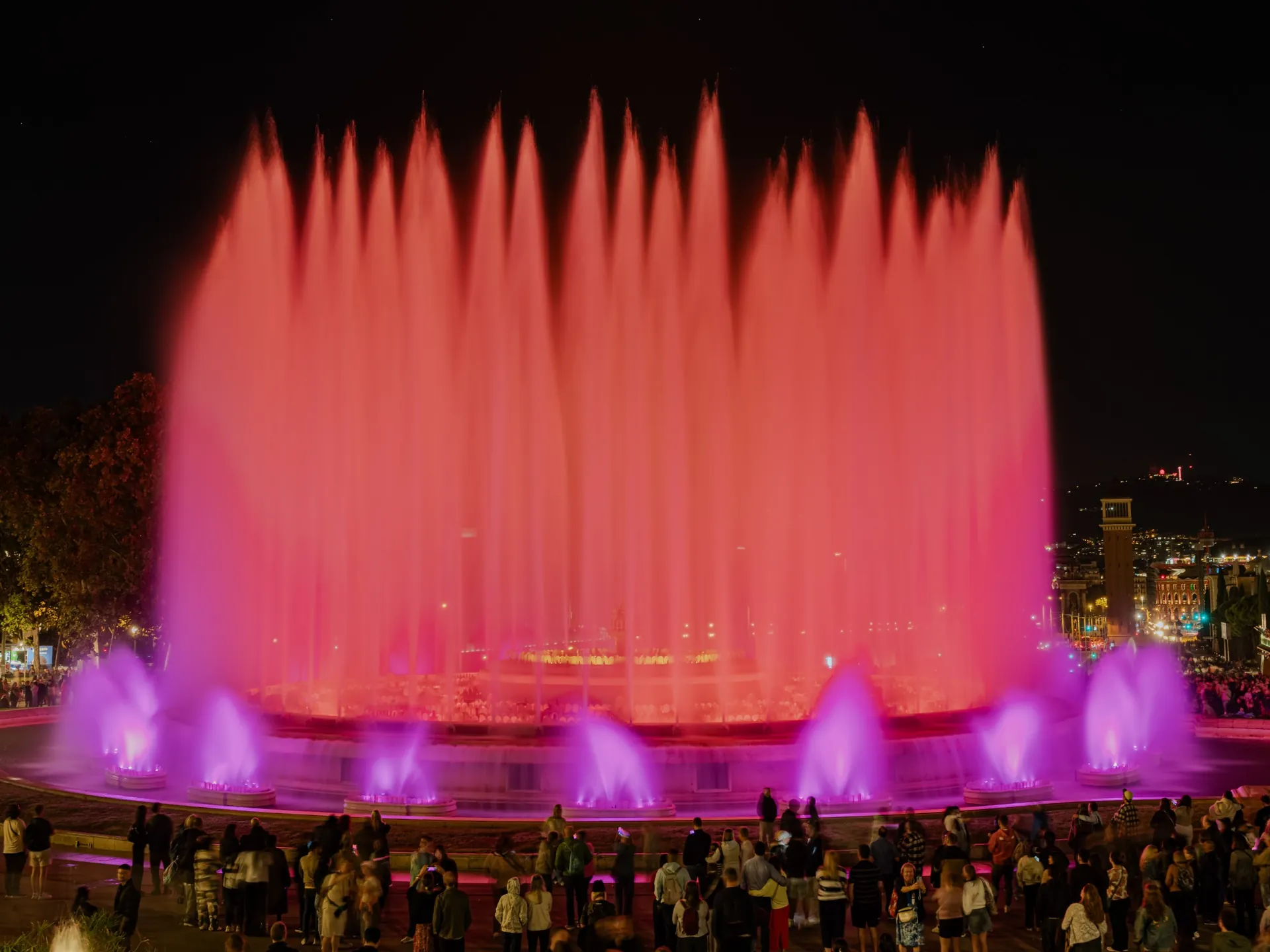
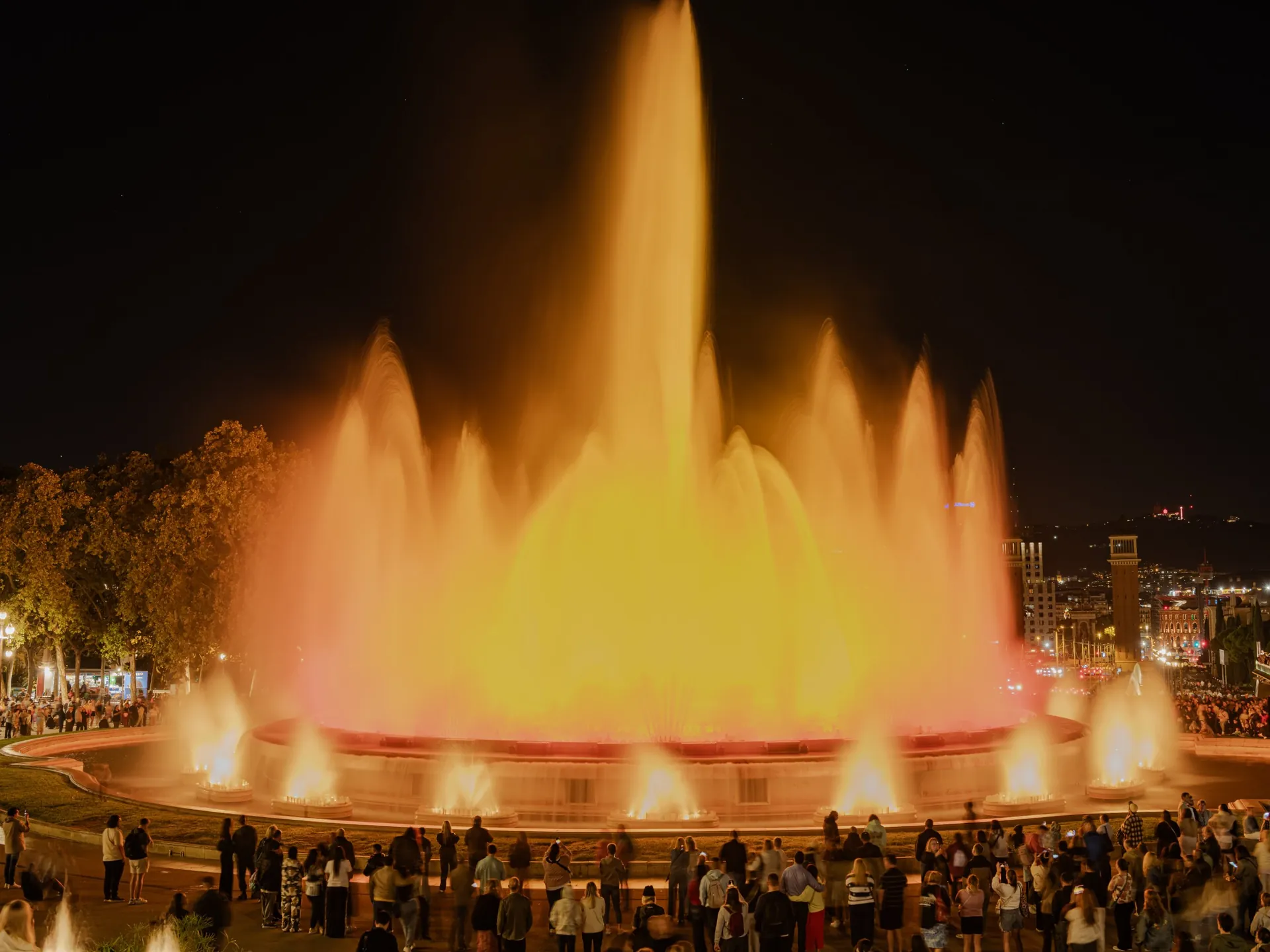
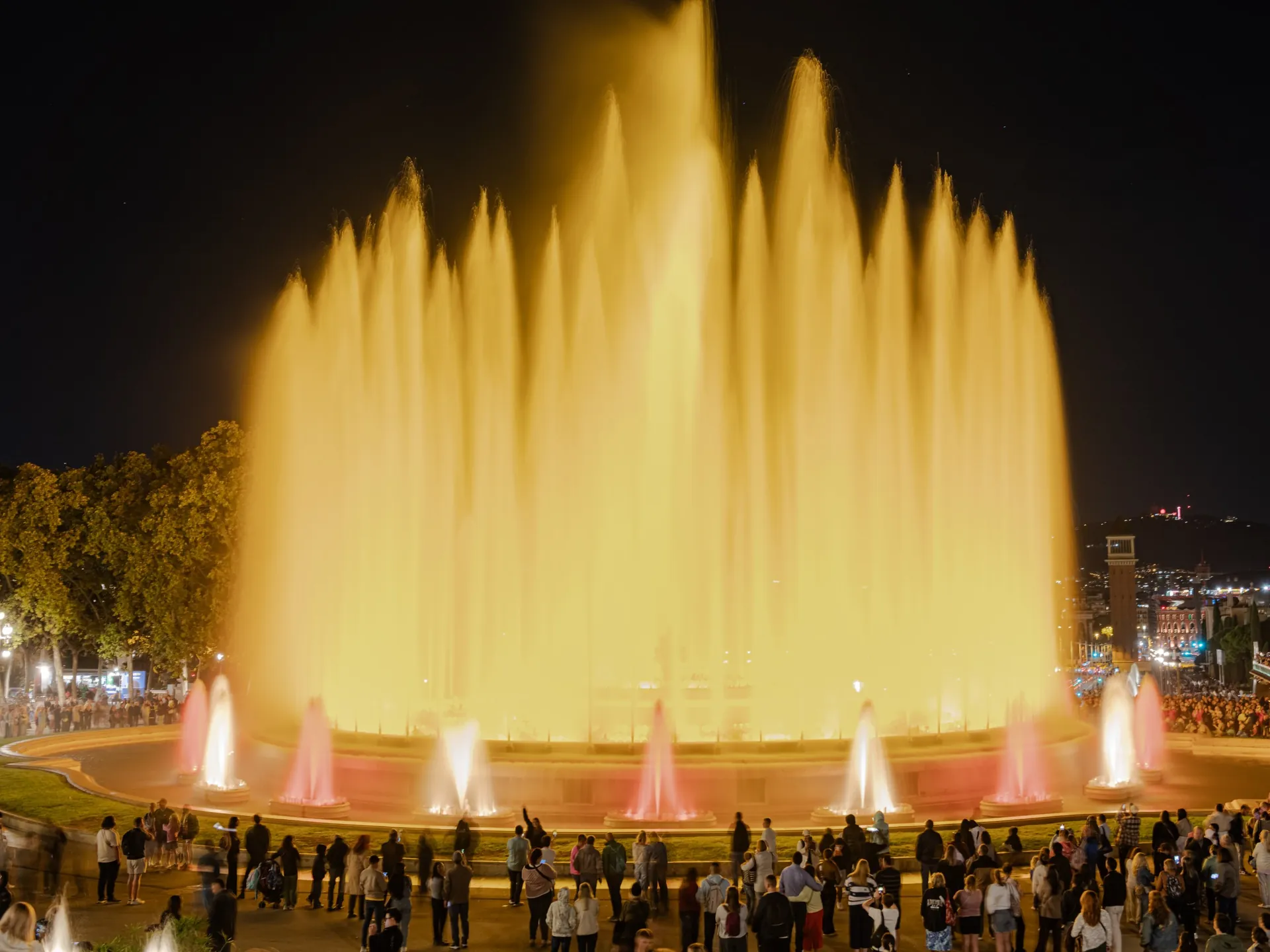
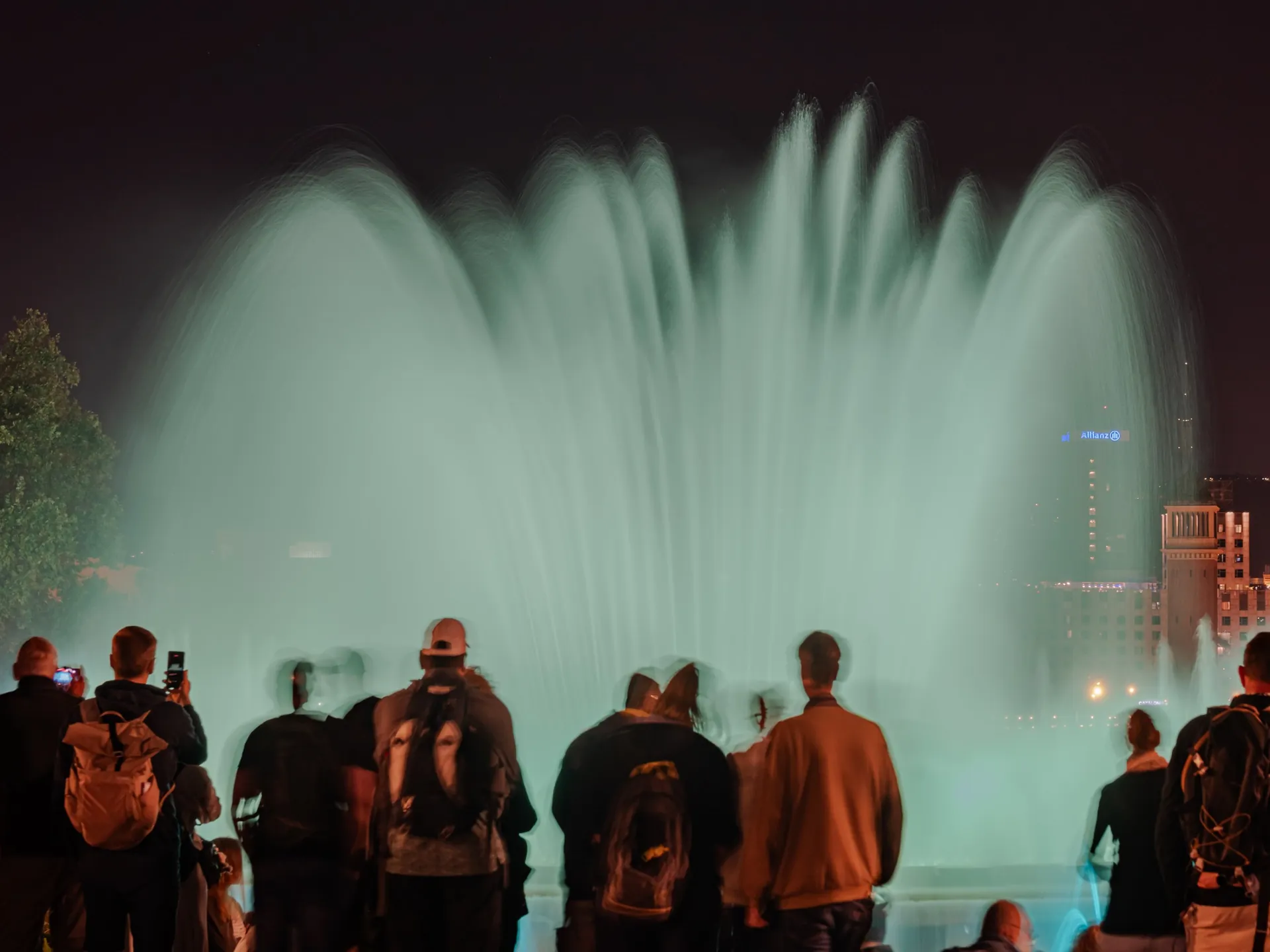
This is exactly where the difficulty shows. At night, the phone needs more time to capture the light, and during that time it has to stay completely still. Handheld, the photo comes out blurred. With the tripod, on the other hand, the buildings and columns stay sharp while the moving water turns into a veil of colour.
And the show doesn’t wait: the colours change in seconds. With the phone already mounted and framed, Jury only had to watch for the moment and shoot.
A keepsake to take home
After the photo walk I sent her a video of her best photos on WhatsApp, so she could share her night in Barcelona with her loved ones in Manila.
Only have your phone?
That’s all you need. I’ll show you how to get the most out of your phone in Barcelona’s most photogenic spots, at night too.
“You can photograph the Magic Fountain on a phone too.”
