
This is probably one of the photo tours I do most often, after Montjuïc, because the photos turn out so spectacular. Personally, I call it the Waterfront tour, and it has several positions or locations. In a very small area, between Barceloneta and Port Olímpic, you get some of Barcelona’s most recognisable buildings, the sea and one of its best-known sculptures.
In this article I show you those positions, what you can photograph from each one and how we usually end the day when I combine it with Montjuïc. If you want to see all the routes I do, you can find them in my photo tours in Barcelona.
Hotel W, a glass sail facing the sea
Our meeting point can be near Hotel W. It doesn’t matter what time of day it is: photos of this building always look like something out of a film, by day, by night or in the late-afternoon light, whatever you prefer.
The building was designed by Ricardo Bofill and opened in 2009 as the first W hotel in Western Europe. It stands at the far end of Barceloneta, on land reclaimed from the sea at the new harbour entrance. It has 29 floors, is almost 100 metres tall and has 473 rooms, and its sail shape, with the glass façade reflecting the sky and the sea, gave it the name everyone in Barcelona knows it by: the Hotel Vela, the “sail hotel”.
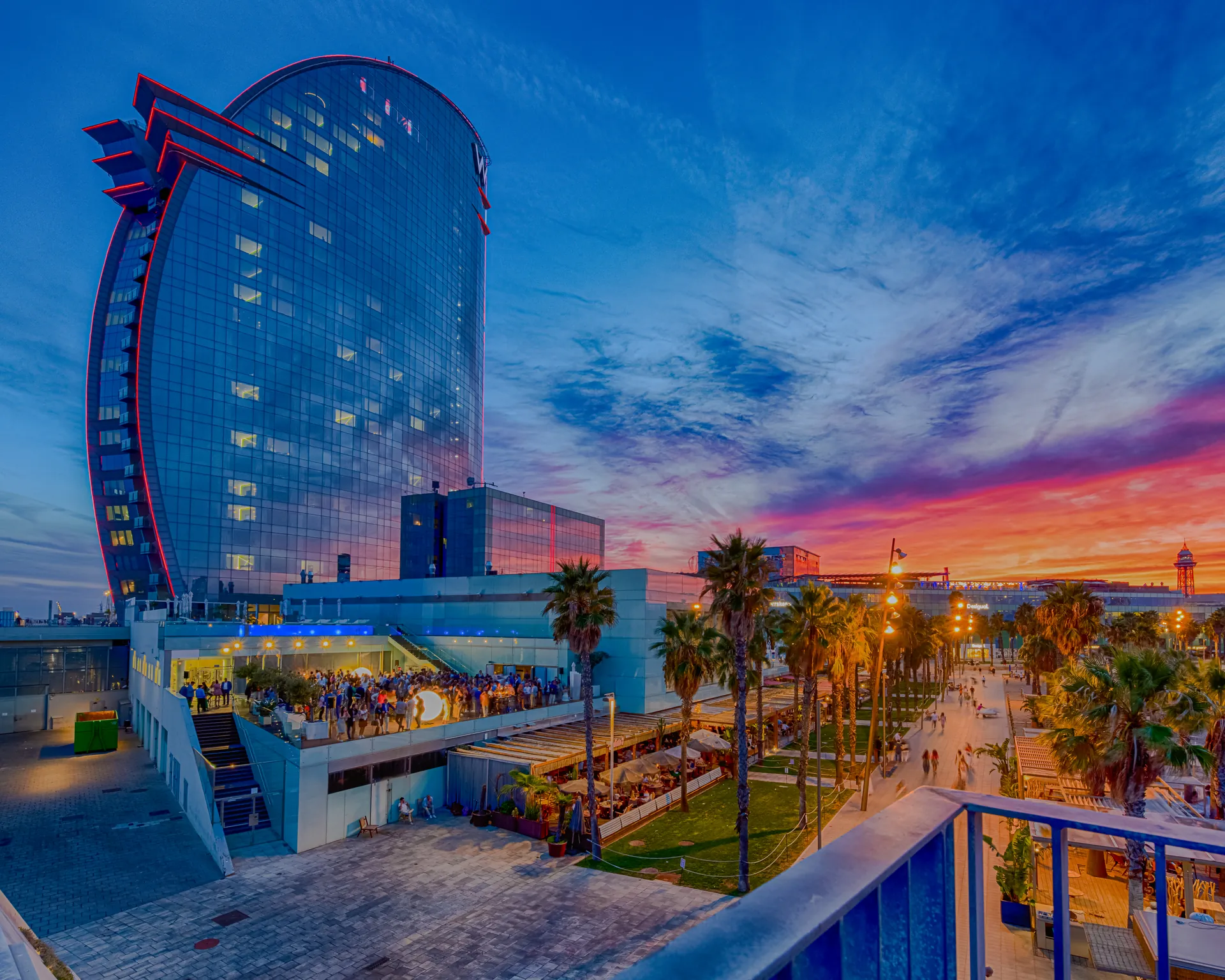
That glass façade is what makes it so photogenic, and also what makes it tricky. In the middle of the day, with the sun high, the glass reflects the light very strongly: you get glare and blown-out highlights, and the building can look flat, almost like a mirror of the sky. In the late-afternoon light, on the other hand, the glass takes on the warm tones of the sunset.
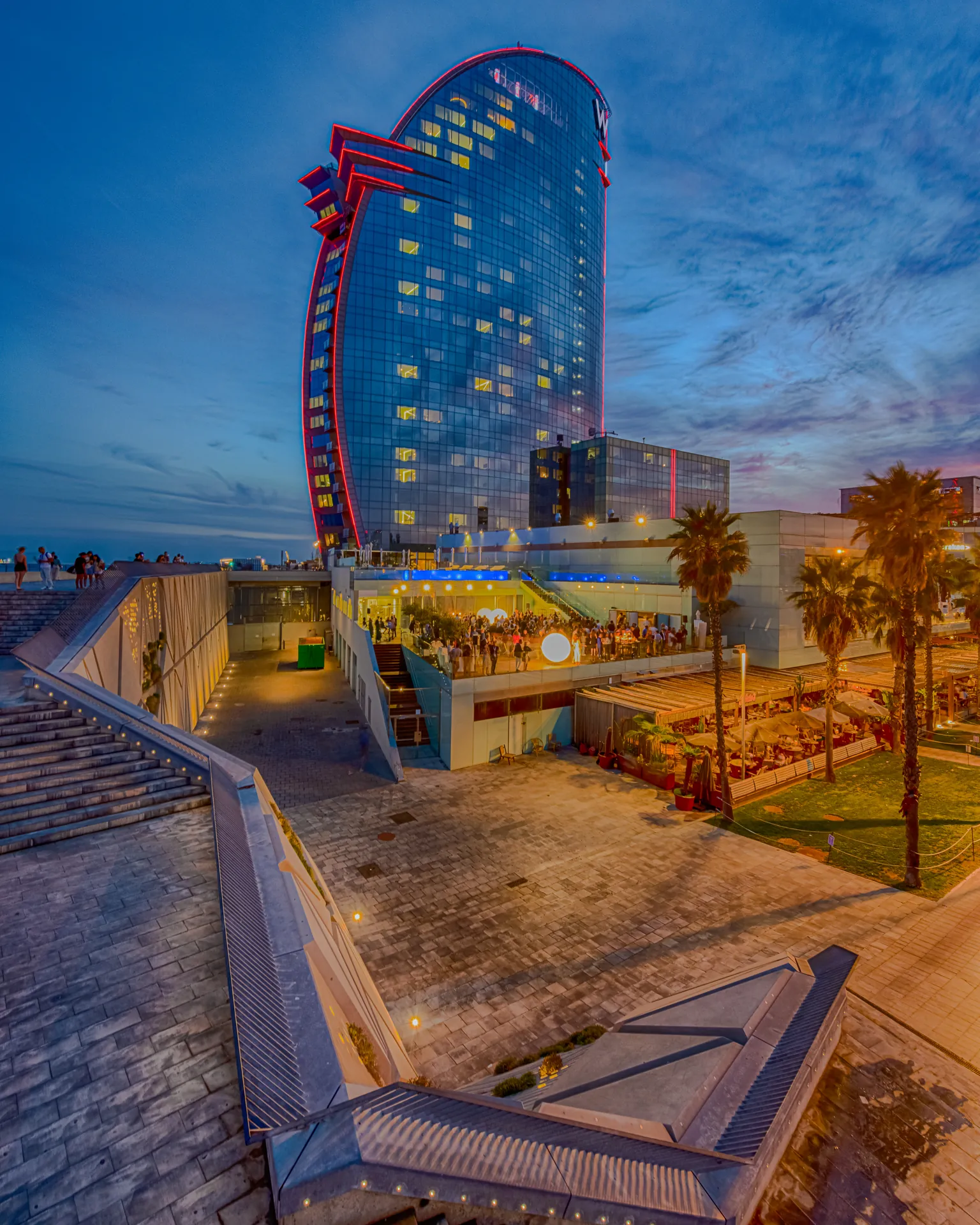
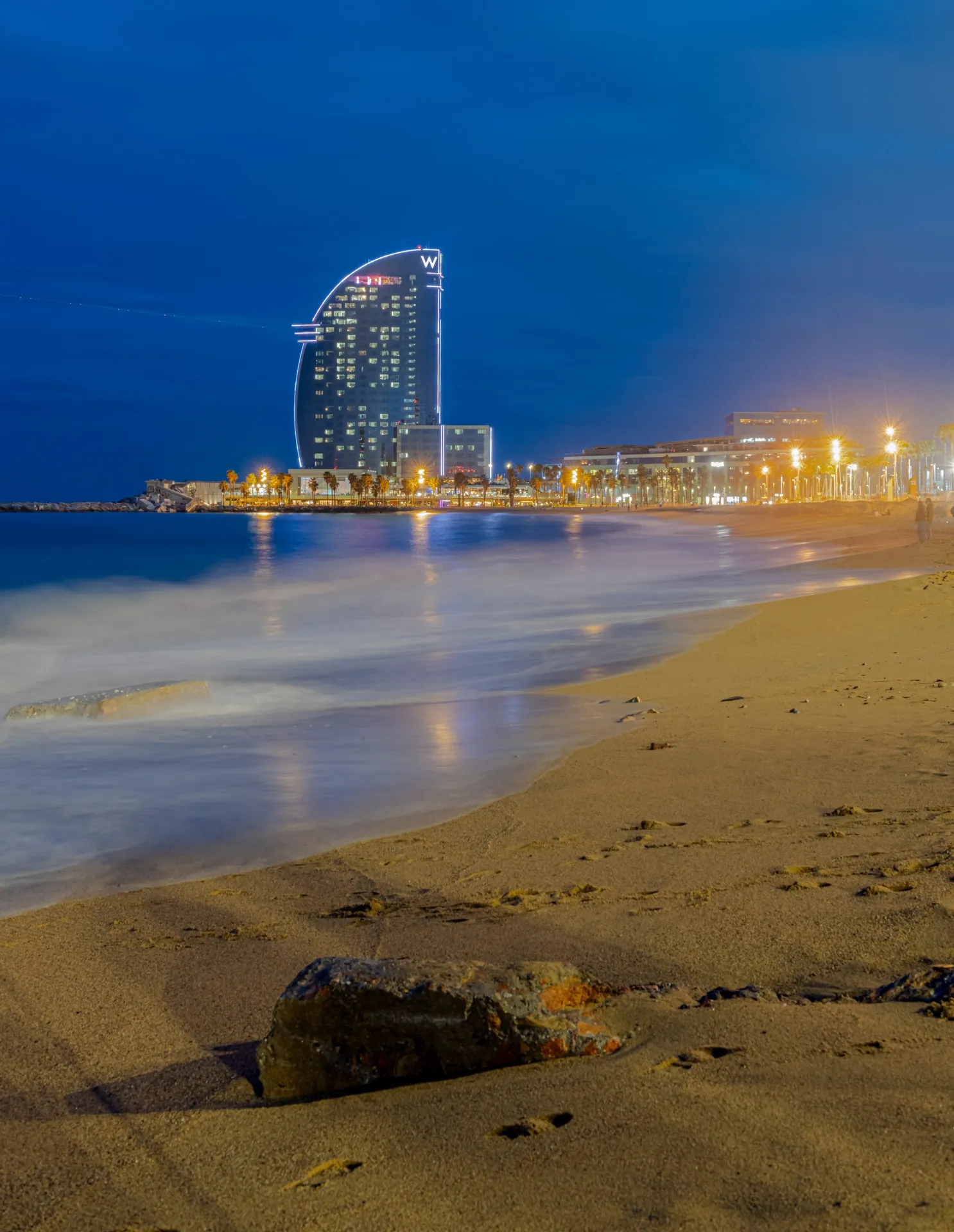
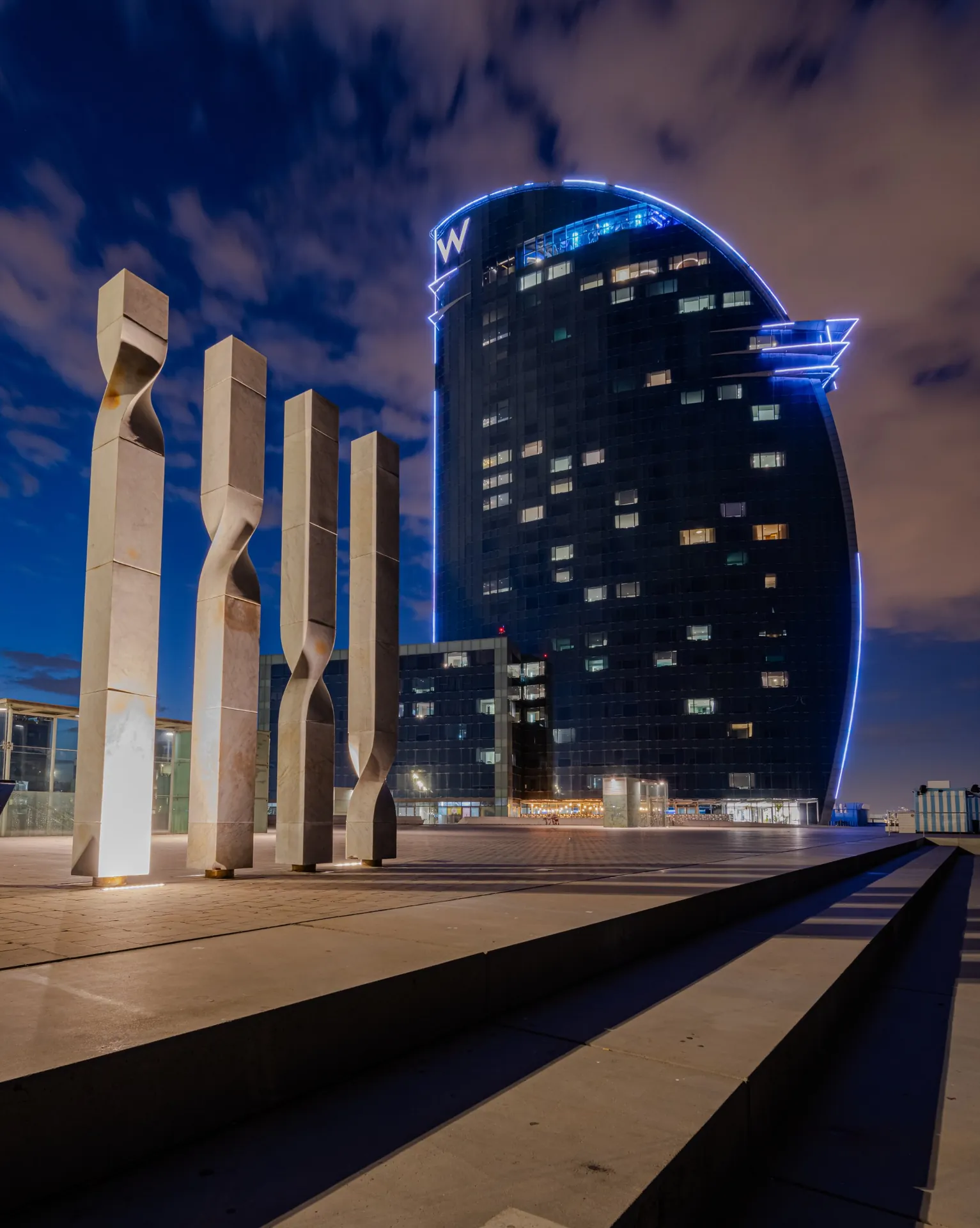
And the blue hour is especially beautiful. The sky still has colour, the room lights and the light lines tracing the outline of the sail come on, and the light of the sky and the building are balanced. That’s when Hotel W looks its most elegant.
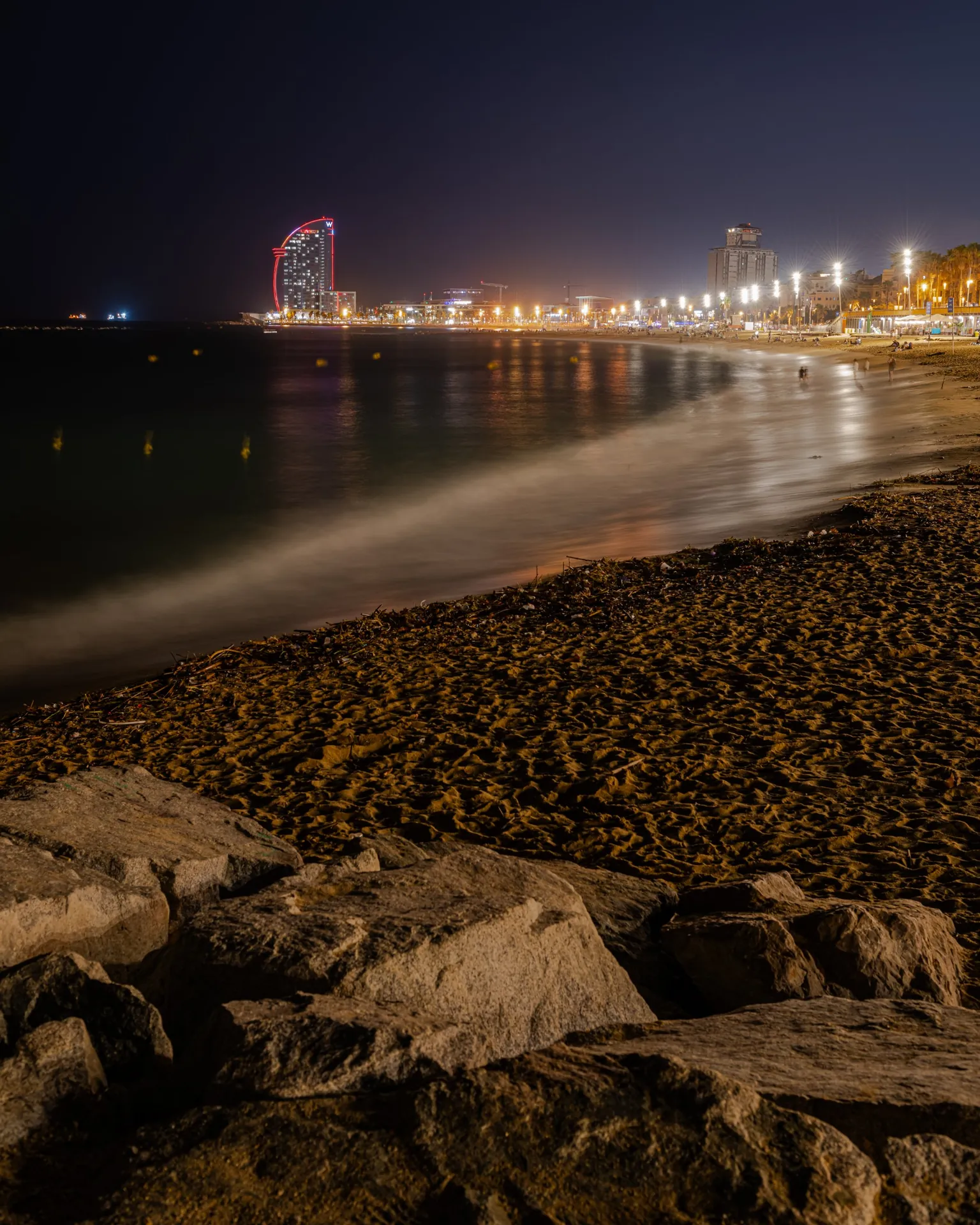
Somorrostro Beach, two photos depending on where you look
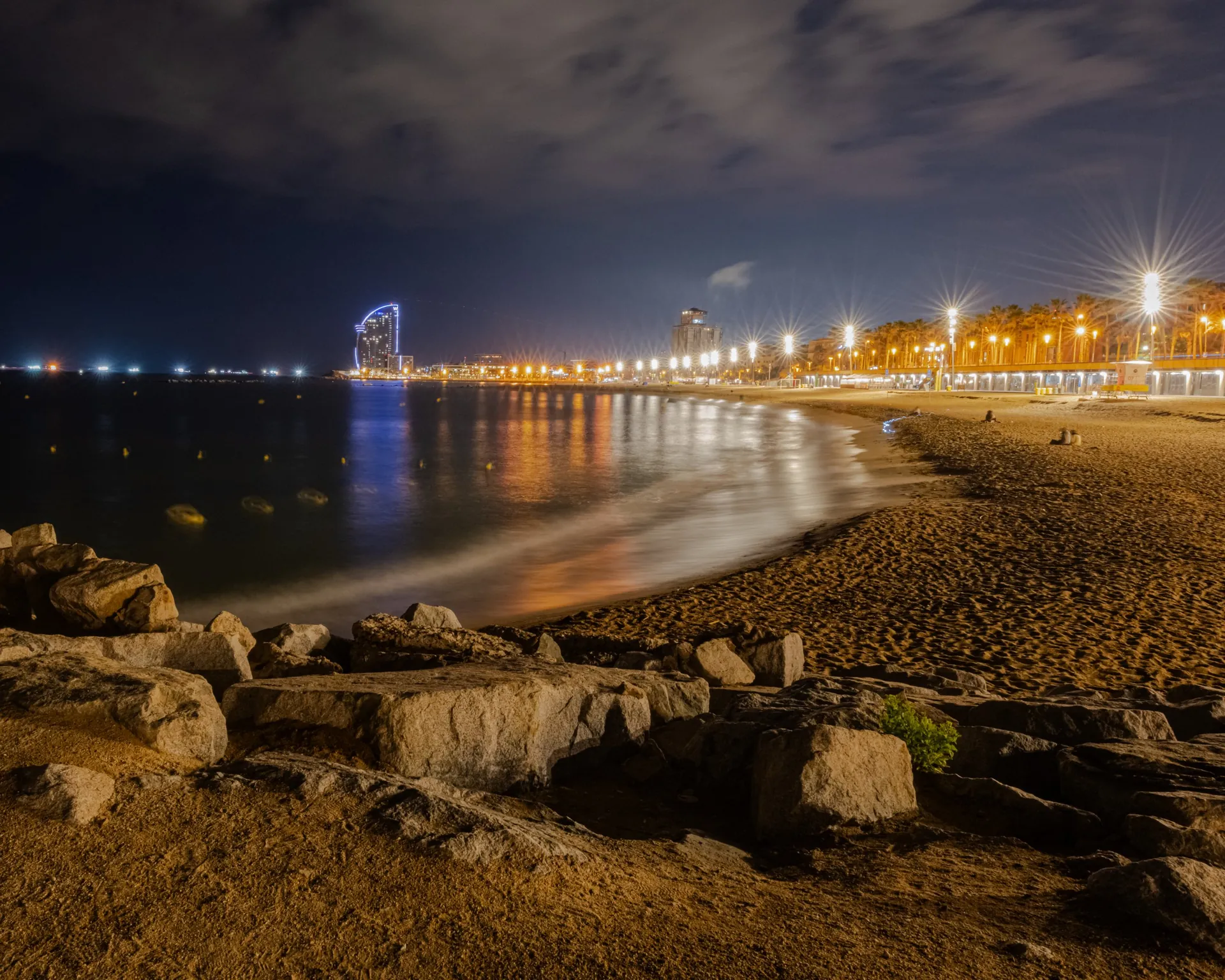
From Hotel W we carry on on foot along the seafront promenade, past the beaches of Sant Sebastià, Sant Miquel and Barceloneta, until we reach Platja del Somorrostro. It’s about 2 kilometres, a relaxed half-hour walk by the sea.
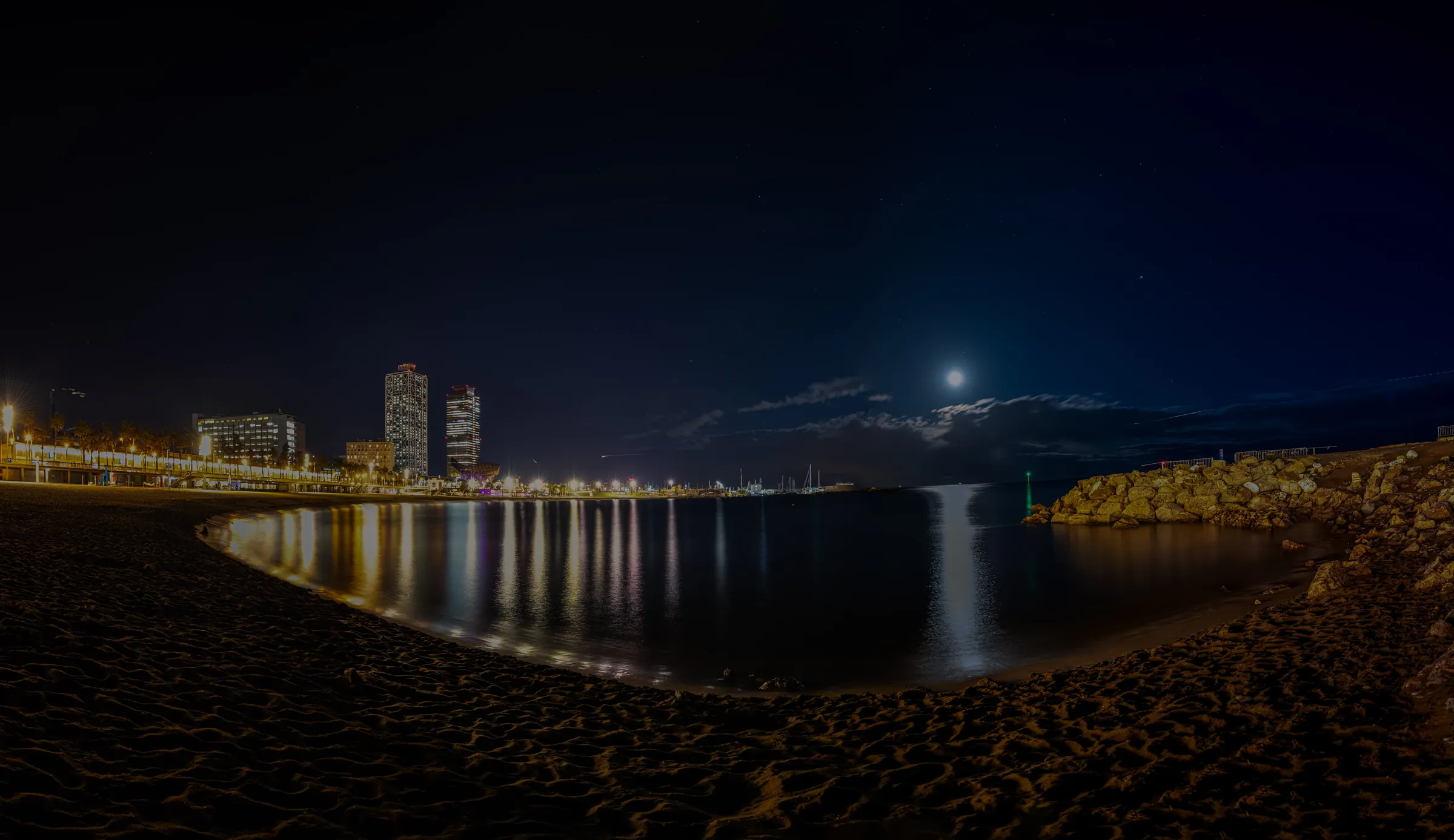
Somorrostro is a beach of just over 500 metres that runs from the Espigó del Gas breakwater to Port Olímpic, and it has a history: this was the site of the Somorrostro shanty town, where up to around 15,000 people once lived.
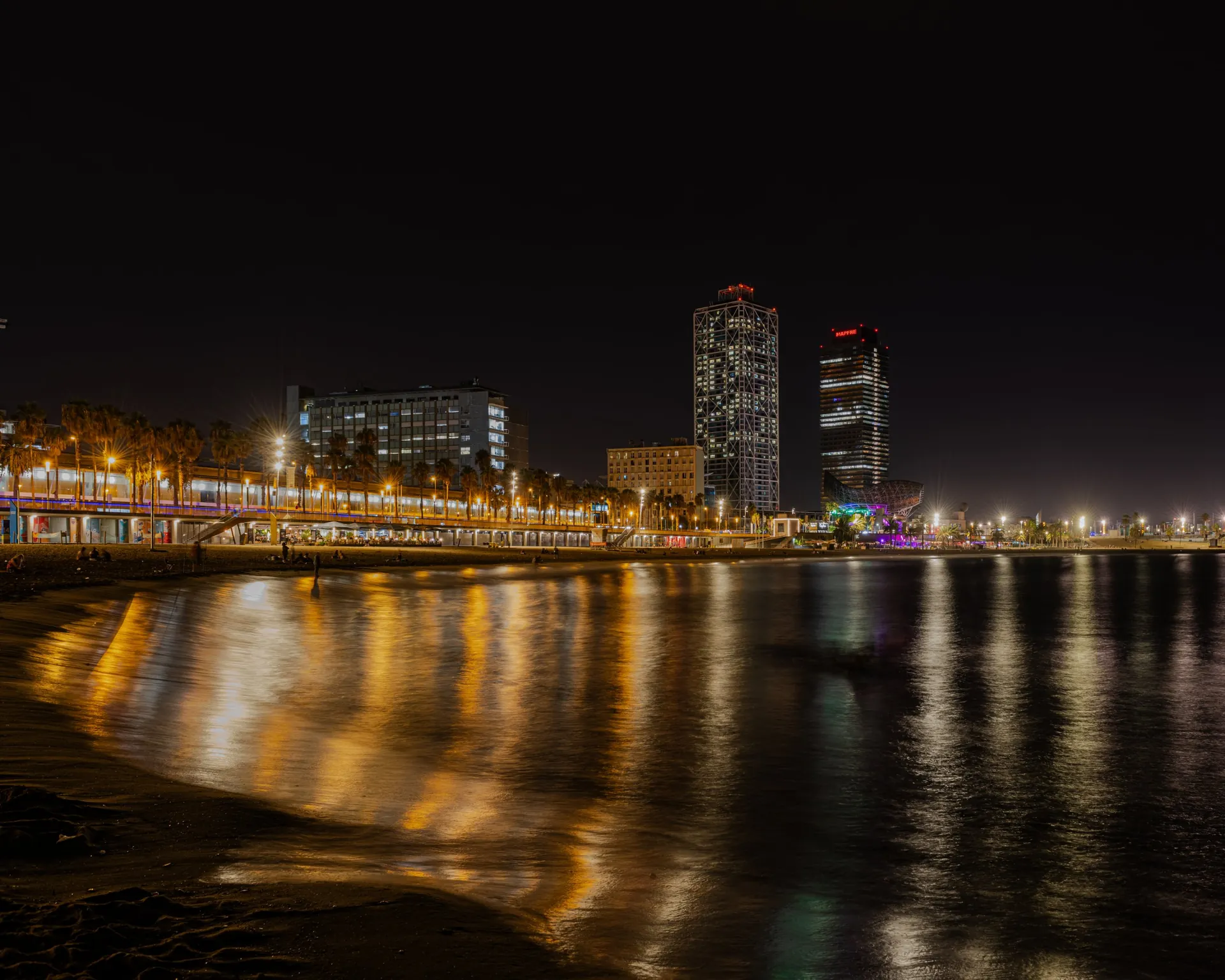
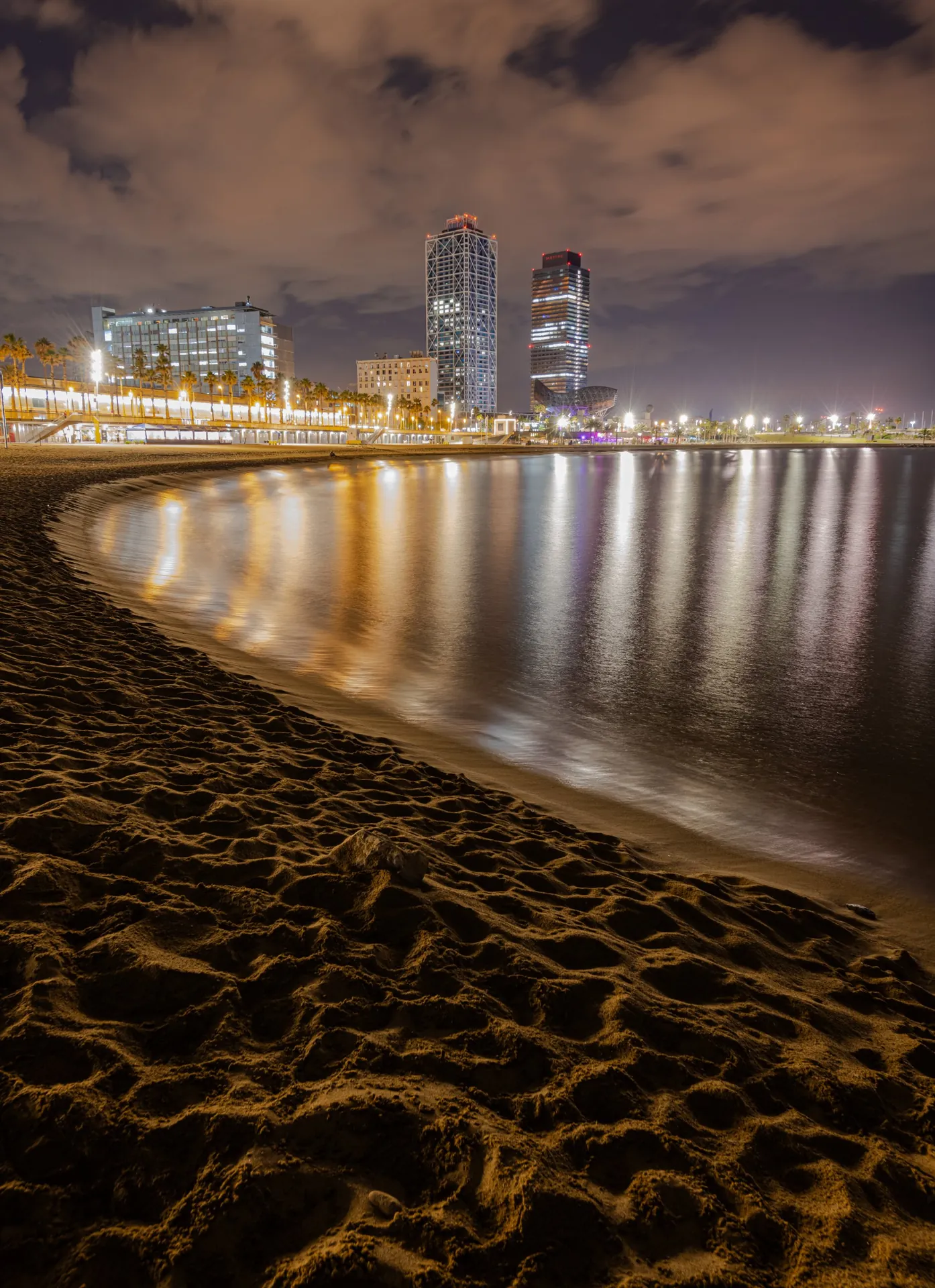
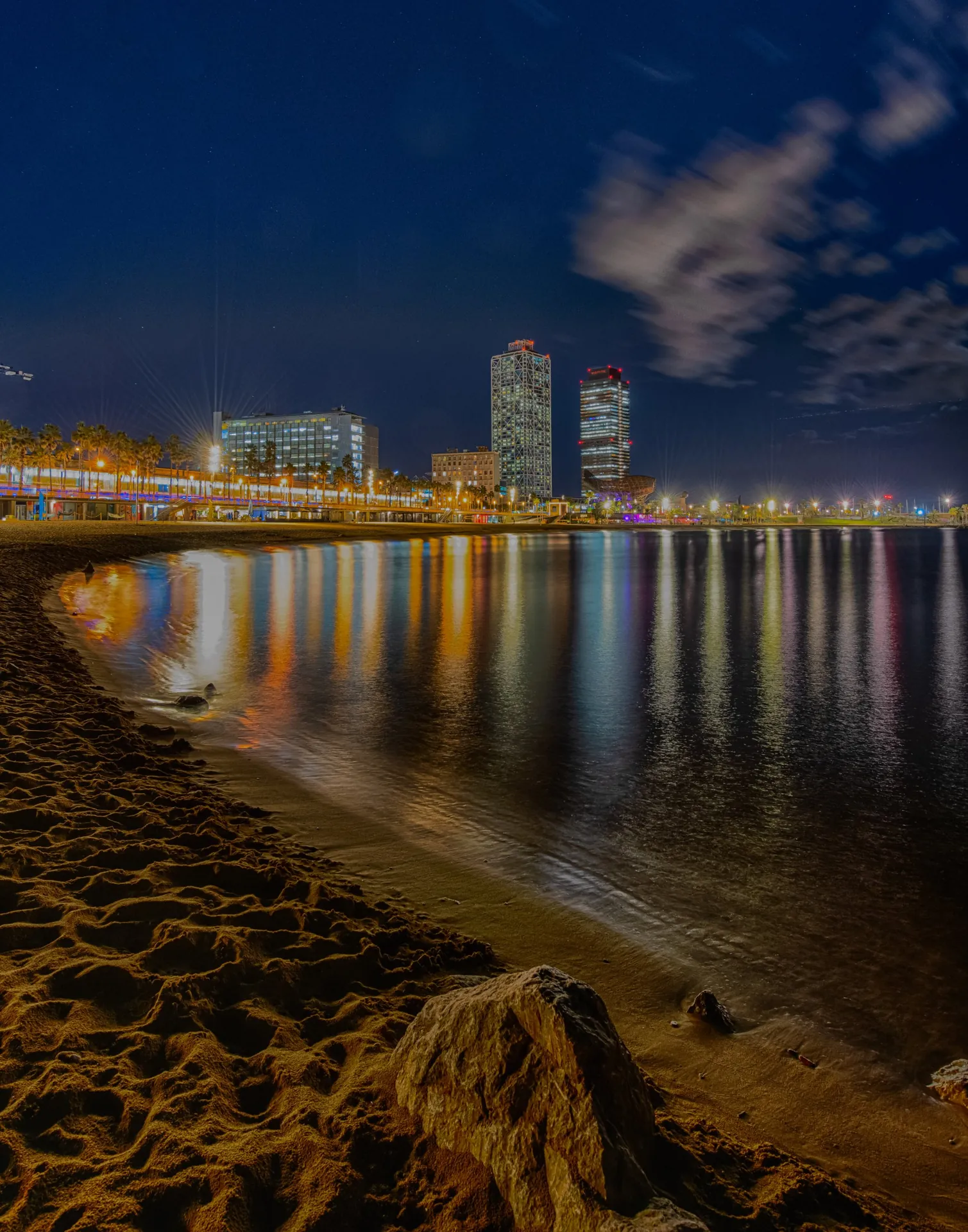
And here you don’t just have the beach itself. Looking north, you get one kind of shot with Torre Mapfre and Hotel Arts, the two 154-metre twin towers of Port Olímpic, completed for the 1992 Olympic Games. But if you look south, you have Hotel W closing off the other end, now from a distance and with the whole beach in front of it.
L’Estel Ferit, the sculpture I’ve photographed in a thousand ways
One of my favourite positions is the Wounded Star, the sculpture of stacked cubes. I’ve photographed it with clients in a thousand different ways.
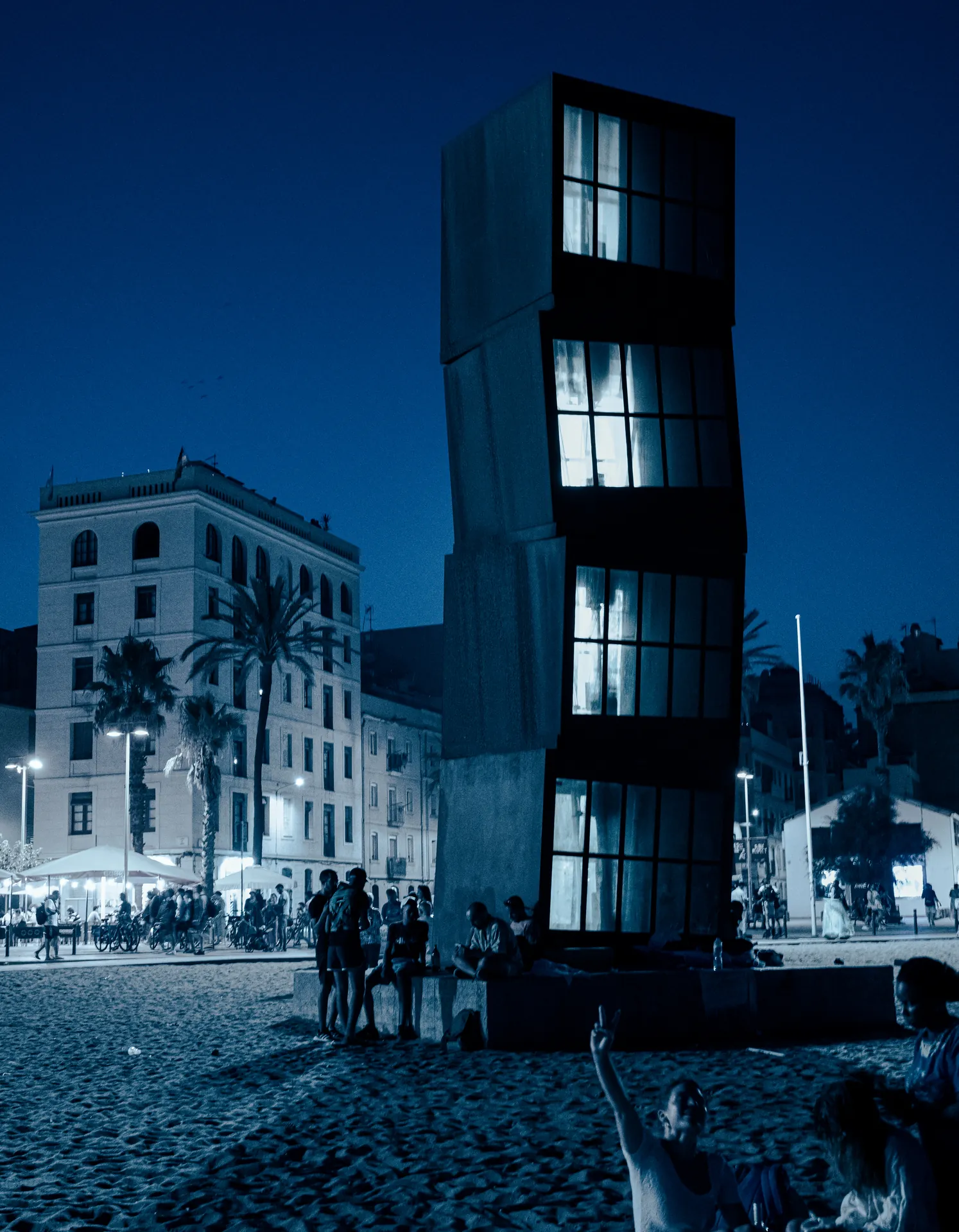
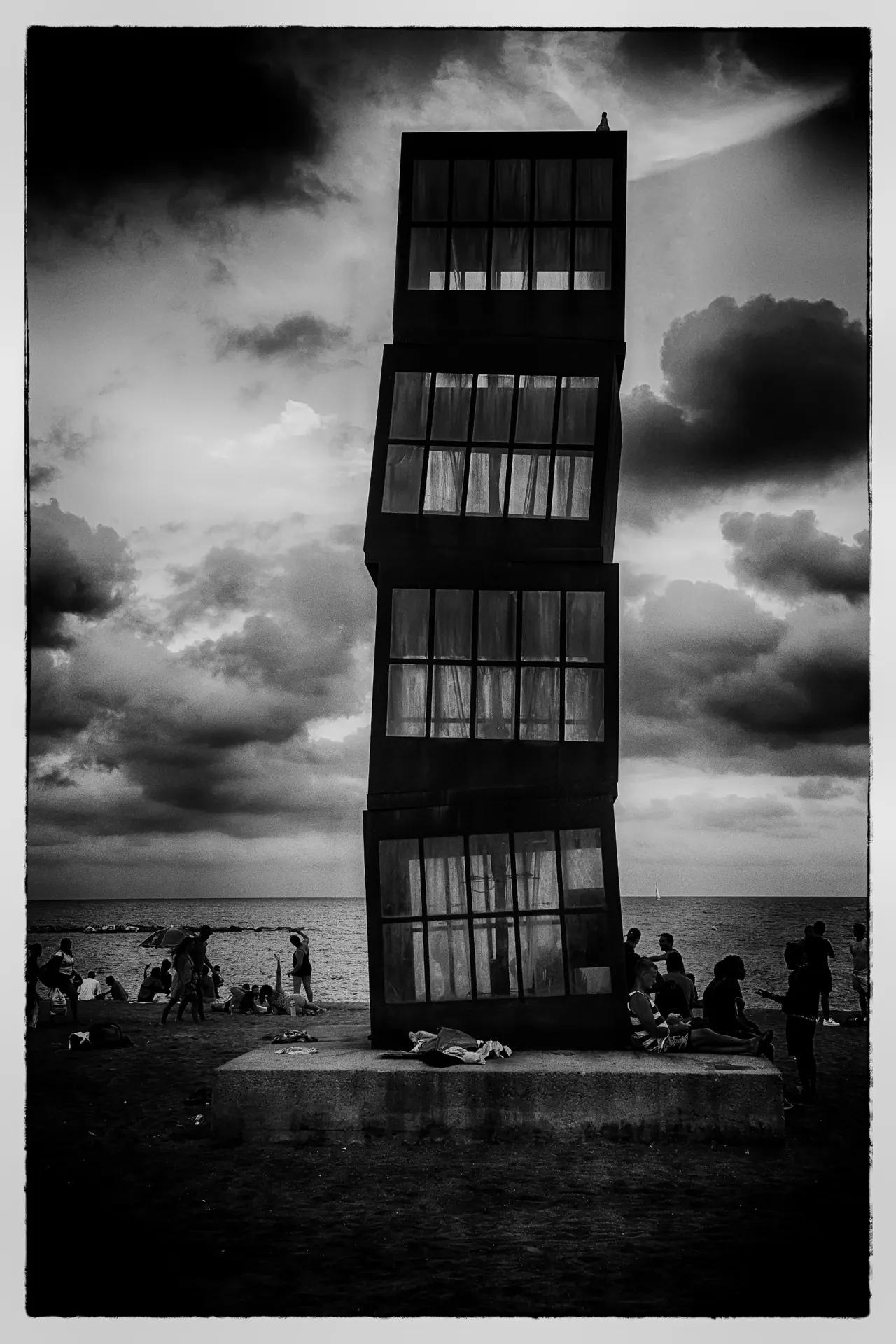
It is the work of German artist Rebecca Horn and was unveiled in 1992 on Sant Miquel beach in Barceloneta. It is made of four stacked steel and glass cubes, around 10 metres tall, and pays tribute to Barceloneta’s old beach bars, the chiringuitos that disappeared when the seafront was transformed before the Olympic Games.
La Mercè fireworks
If the tour coincides with a special occasion, like the La Mercè festival in September, we get the chance to photograph the fireworks. And the result is photos like these: Barcelona lit up by the colours of the fireworks, reflected in the sea or framing the city skyline.
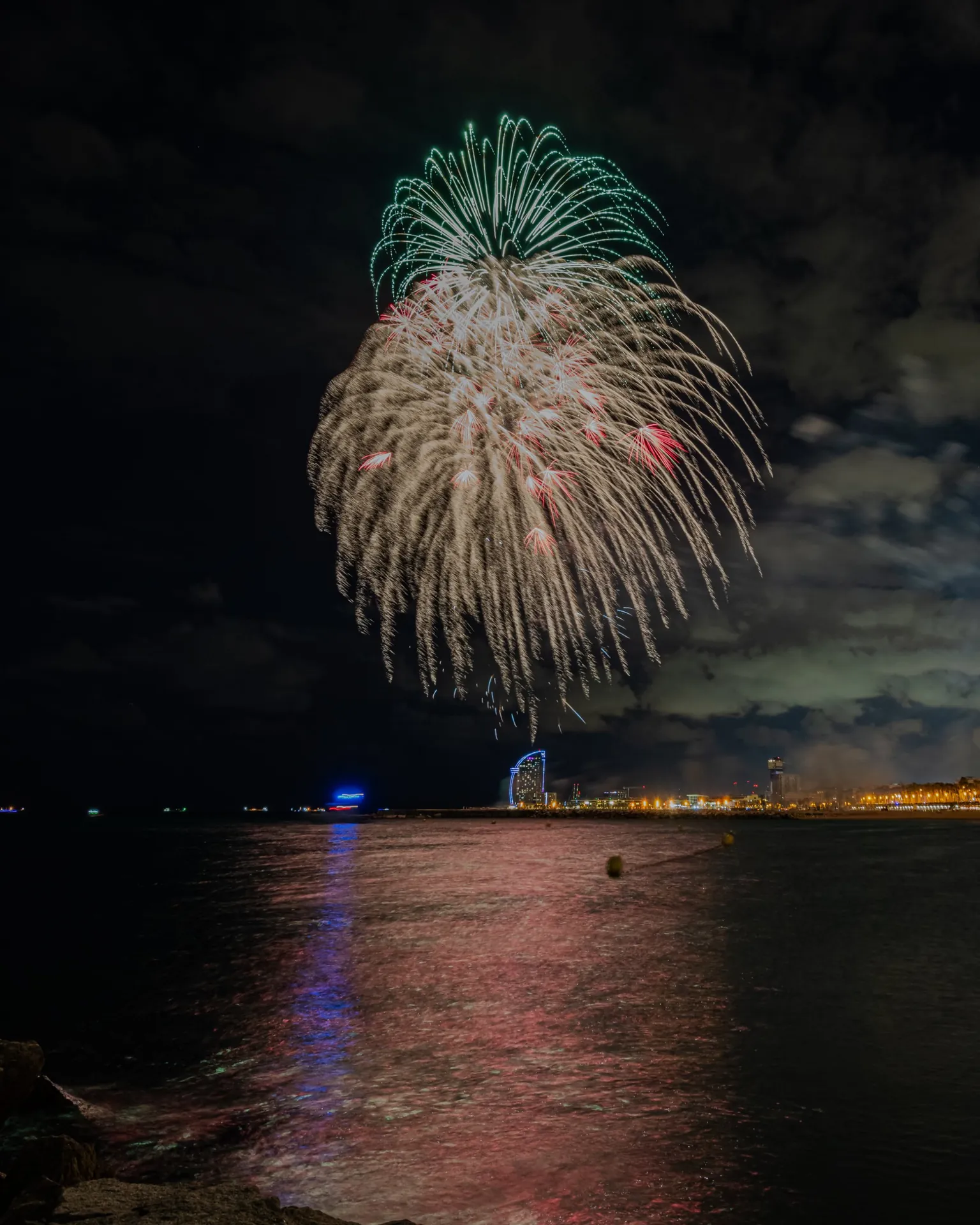
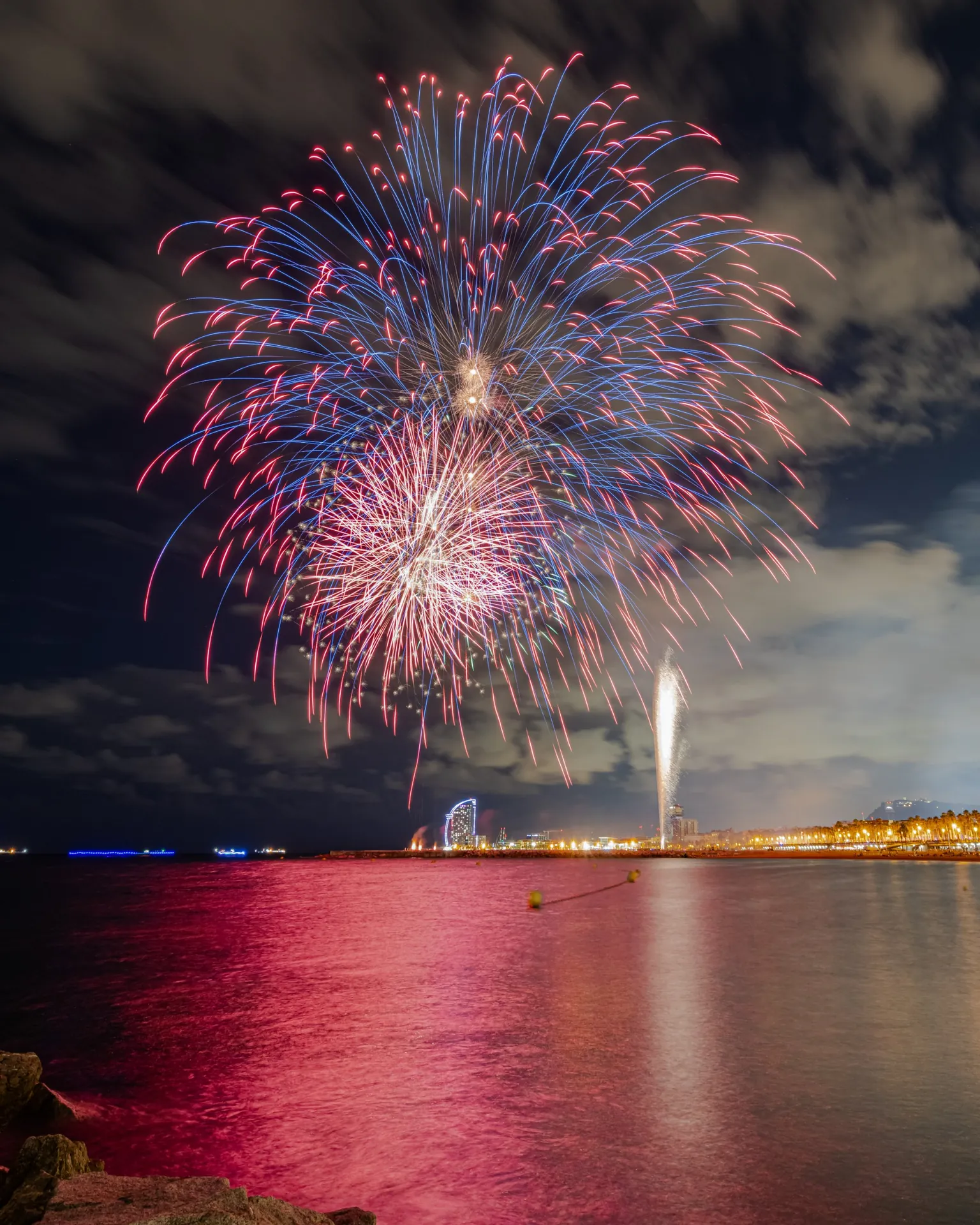
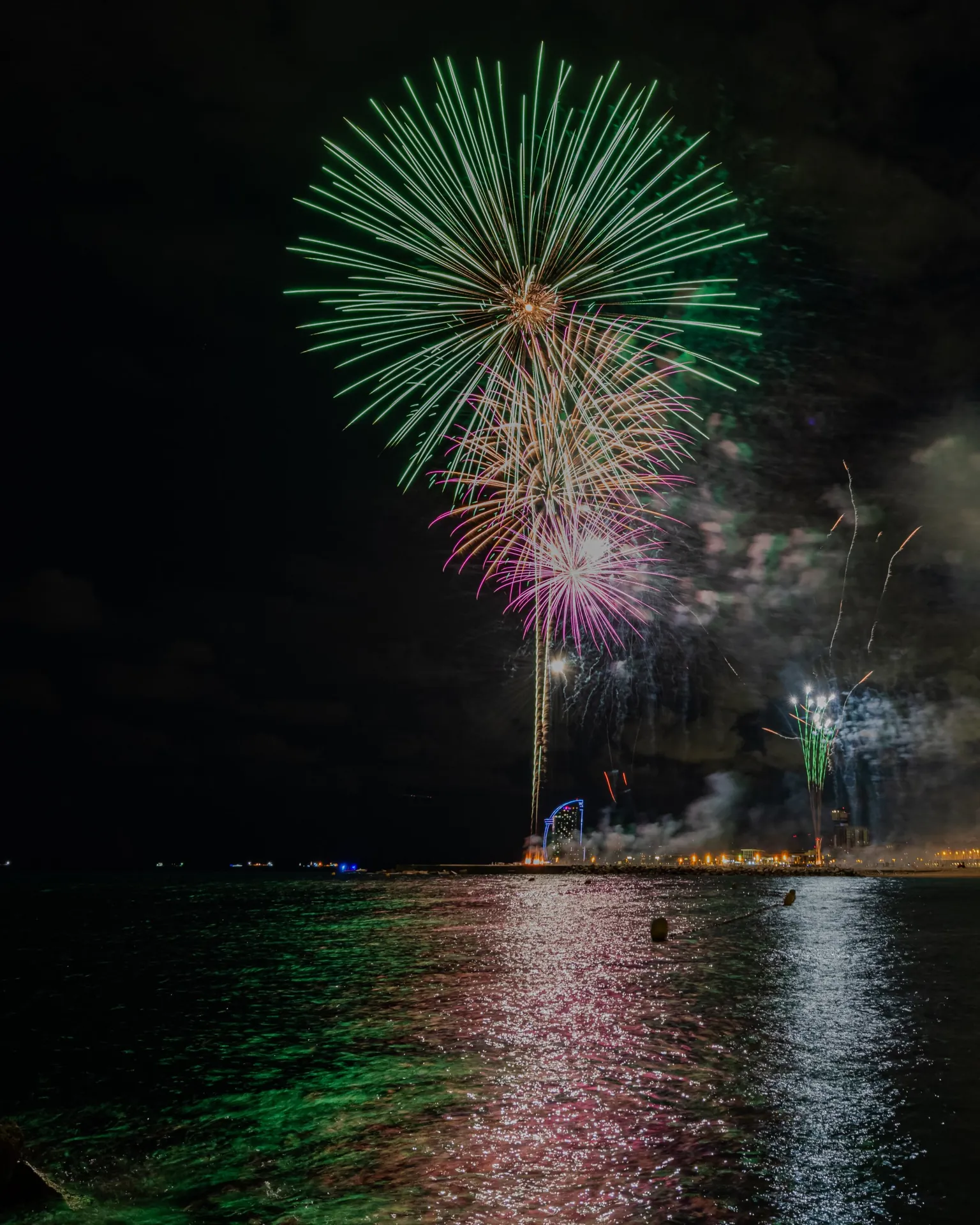
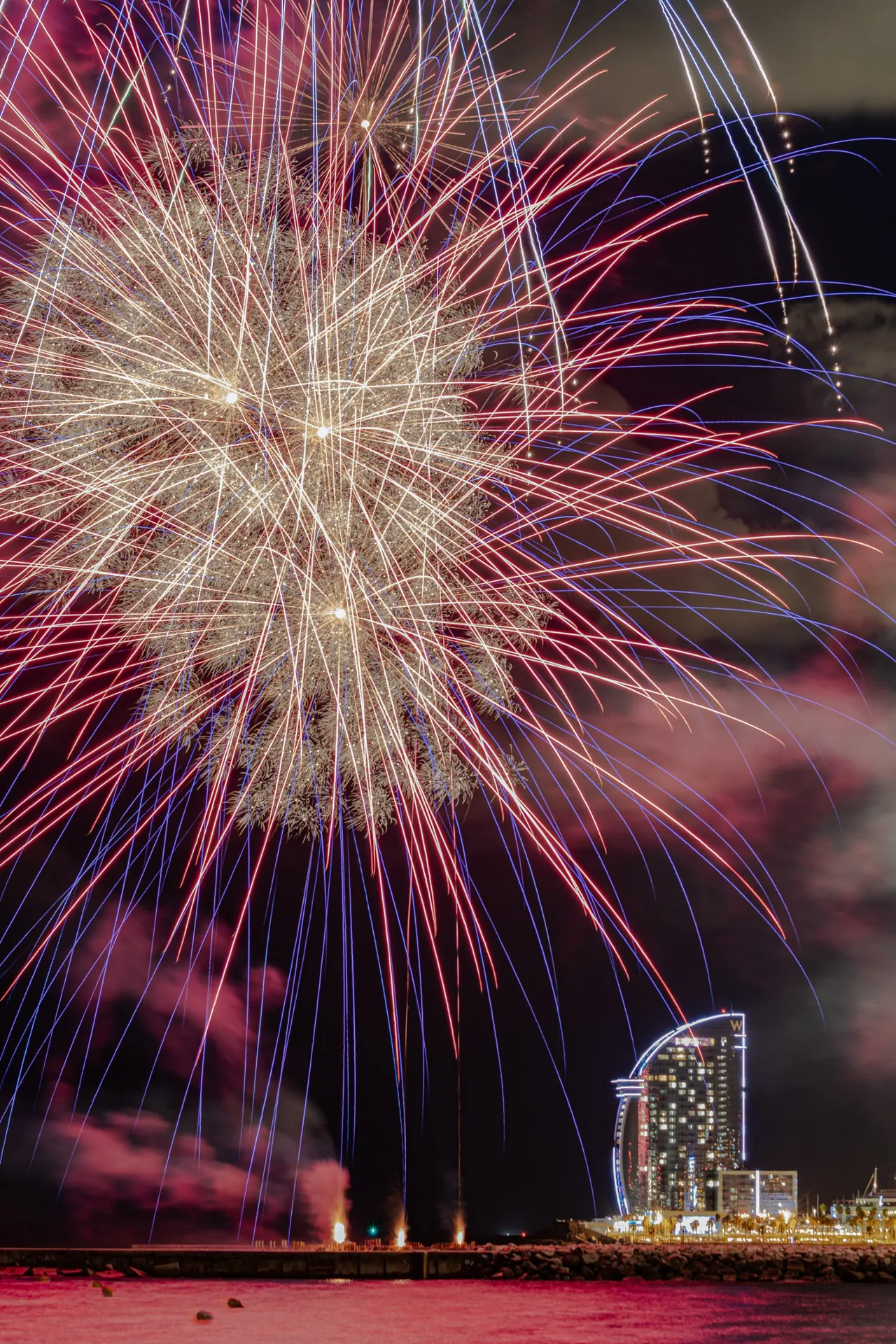
And if night photography is what draws you, there’s no need to wait for La Mercè. On my night photography tour the seafront promenade and Diagonal Mar are some of the stops. We start at dusk to make the most of the blue hour and the city lights, and you learn to work with a tripod, long exposures, artificial light and reflections, with a camera or even with your phone.
For the La Mercè fireworks I usually use Somorrostro as my setting. This year they were launched from Nova Icària beach, so I went up to El Carmel to get Torre Glòries in the middle of the frame.
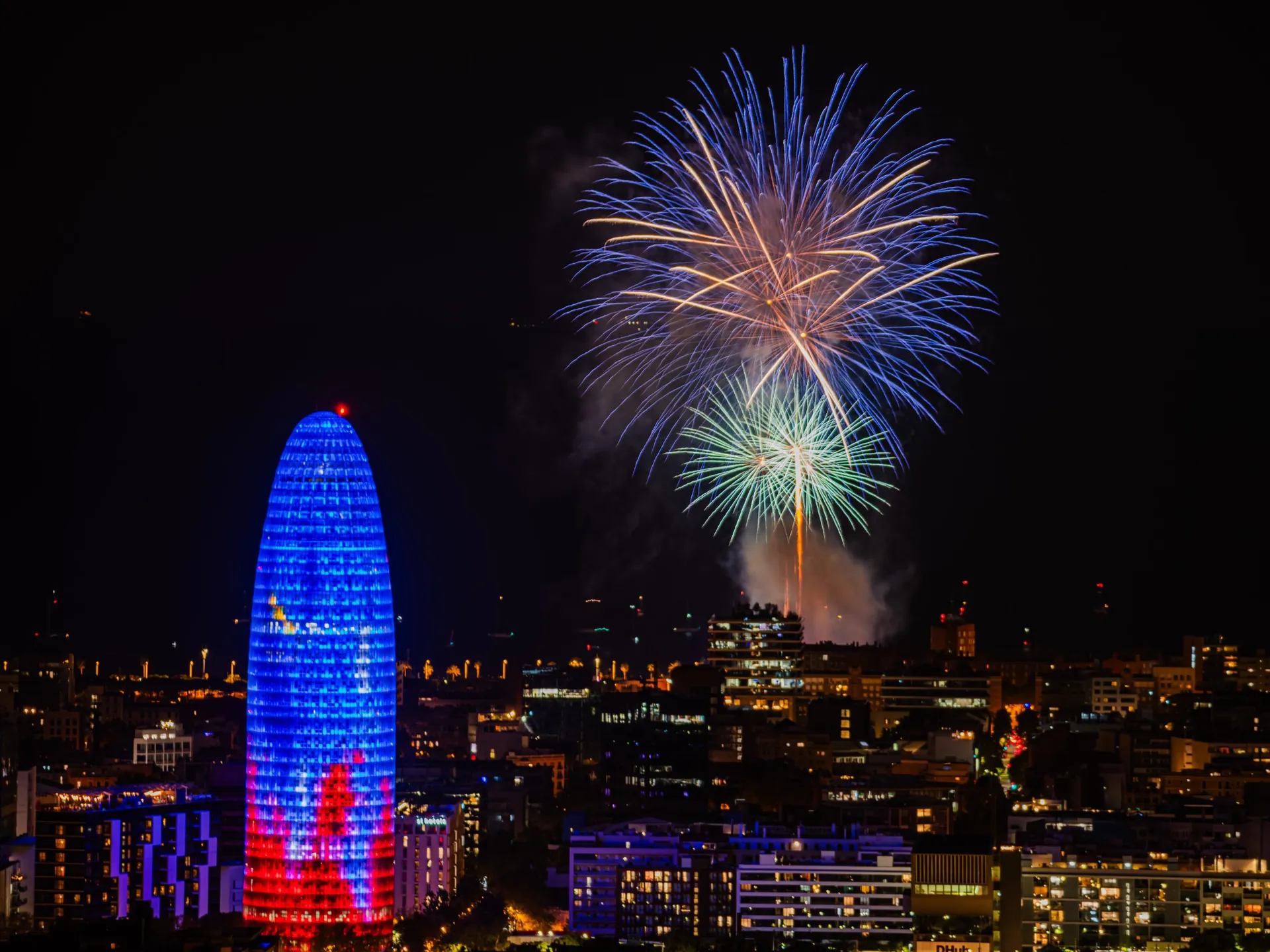
Torre Glòries, formerly Torre Agbar, is the Jean Nouvel building that opened in 2005. It is 144 metres tall and its façade has more than 4,500 LED lights, so at night it is a very recognisable landmark on the Barcelona skyline.
To finish: dinner on the sand at Ca La Nuri
When I take clients around Montjuïc first and then we head down to Somorrostro, we usually end up having dinner at an iconic spot: Ca La Nuri, right at its restaurant on Platja del Somorrostro itself, on the sand. It serves seafood cooking: fish, shellfish and rice dishes.
After a day enjoying photographing half of Barcelona, ending with a bite to eat and a beer in front of the beach at night is, I promise you, a real treat.
Want to photograph Barcelona’s waterfront with a local photographer?
I’ll take you to Hotel W, Somorrostro and the Estel Ferit, and if you like we can combine it with Montjuïc to end the day by the sea.
“Ending with a bite to eat and a beer in front of the beach at night is, I promise you, a real treat.”
